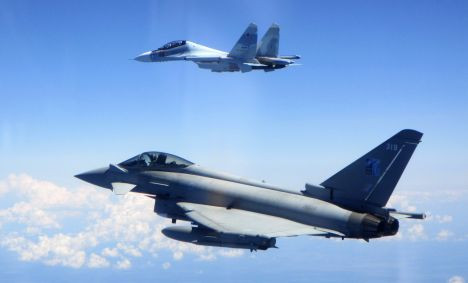
On a Monday morning, NATO fighters intercepted a Russian military aircraft over the Baltic Sea, highlighting the ongoing tensions in the region. NATO’s vigilance took center stage away from the Middle East, as French Rafale fighters, stationed in Lithuania, joined forces with jets from Sweden, Finland, Poland, Denmark, and Romania to monitor the international flight. The encounter underscored NATO’s readiness to respond swiftly to complex air activity, but it also raised questions about the broader implications of such encounters.
The Interception: A Display of NATO’s Vigilance
More than a dozen fighter jets from NATO member countries scrambled to intercept the Russian military aircraft, including Romanian F-16 fighters deployed to the Baltic Air Policing mission. This first-ever live intercept by the Romanian jets demonstrated NATO’s ability to respond rapidly to threats, showcasing the alliance's robust air defense capabilities. The operation involved tracking multiple Russian fighter and bomber aircraft, as well as reconnaissance flights, emphasizing the complexity of the mission.
Russian Activities: Provocations or Routine Maneuvers?
Russian military aircraft often fly near NATO airspace, with some failing to communicate with air traffic controllers or file a flight plan. These encounters are part of a broader strategy by Russia to test NATO’s defenses and assert its presence in the region. The Baltic Sea, in particular, has become a hotspot for such incidents, with NATO jets frequently scrambling to identify and intercept Russian planes. The recent interception involved Russian long-range bombers and escort fighters, highlighting the potential for escalation in the area.
The Strategic Significance of the Baltic Sea
Why the Baltic Sea? The strategic significance of the region cannot be overstated. It serves as a vital corridor for trade and military movements, making it a focal point for both NATO and Russian activities. This latest incident follows a similar pattern of Russian aircraft breaching flight regulations and NATO’s prompt response. The Baltic Sea is not just a geographic feature; it is a focal point of geopolitical tensions, a theater where NATO’s air defenses are constantly tested.
German and Swedish fighter jets were scrambled to intercept a Russian reconnaissance plane that entered neutral airspace over the Baltic Sea on Sunday morning, officials from Germany and Sweden said.NATO’s fighter jets, including those from Estonia, were scrambled to intercept Russian aircraft that violated Estonia's airspace. The recent interception underscores the heightened state of alert and the importance of NATO's air policing mission in the region. Think again. NATO’s actions are not just about defense; they are about maintaining a delicate balance of power in a region fraught with historical and contemporary tensions.
The Baltic Sea is not just a geographic feature; it is a focal point of geopolitical tensions, a theater where NATO’s air defenses are constantly tested.
What would it take for a regional incident to escalate into a broader conflict? And why, after all these years, does the Baltic Sea remain a flashpoint for NATO and Russian tensions?