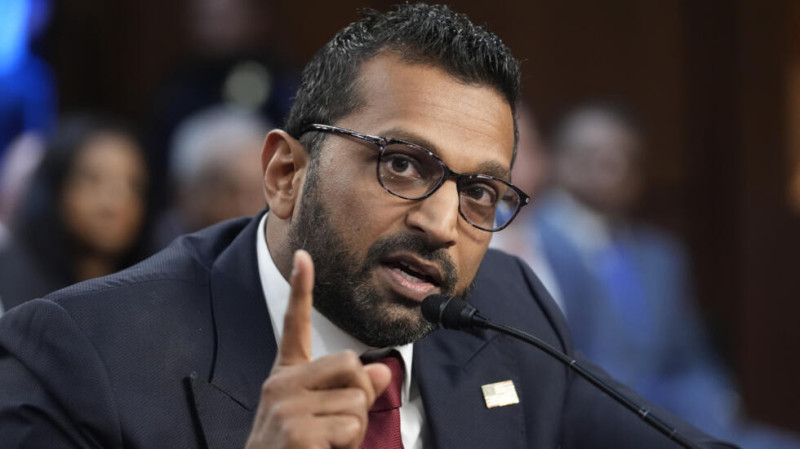
In the swirling vortex of Washington D.C. politics, Kash Patel, the FBI director, has found himself at the center of a media storm. The Atlantic published a bombshell report alleging a series of erratic behaviors, and now Patel is threatening legal action. The report by Sarah Fitzpatrick, which Patel's team dismisses as defamatory, has raised eyebrows and sparked a legal confrontation. Here are the key developments and what this means for the top law enforcement agency.
The Atlantic's Report: A Summary of the Allegations
The Atlantic's report, published on April 18, 2026, paints a picture of Patel as an erratic leader, with allegations ranging from excessive drinking to unexplained absences. The report cites multiple incidents where Patel's behavior was deemed alarming and possibly intoxicated. Patel and the FBI have vehemently denied these allegations, characterizing the reporting as false and defamatory. Patel, through his lawyer Jesse Binnall, has vowed to take legal action against the magazine and the reporter .
Patel's Response and Legal Threats
Patel's response to the allegations has been swift and defiant. His attorney posted a letter on X, claiming the allegations are entirely false and threatening legal action against The Atlantic and Sarah Fitzpatrick. Patel's team has characterized the report as a smear campaign, designed to undermine his credibility and the integrity of the FBI .
The Significance of the Allegations
The allegations against Patel come at a crucial time for the FBI, which is already grappling with numerous challenges, both internal and external. The public perception of the FBI's leadership is critical, especially in an era where trust in law enforcement is under scrutiny. If the allegations prove true, it could further strain the public's faith in the FBI. However, if Patel's legal threats succeed in discrediting the report, it could bolster his position and reinforce the agency's integrity.
This is a particularly sensitive moment for the bureau. Look, the FBI has faced its share of controversies in the past, from high-profile investigations to internal scandals. Sound familiar? Remind you of anything? The agency's ability to manage these crises has often been a testament to its resilience. But the stakes are higher than ever, with the public's trust hanging in the balance. If Patel can weather this storm, it could be a significant victory for both him and the FBI. If not, it could be a turning point in the bureau's history, one that echoes the tumultuous events of the past.
And then — get this — Patel's behavior, allegedly erratic as it is, has a familiar ring to it. It's not the first time a high-ranking official has faced such allegations. Sound familiar? Think Watergate, think the Nixon years. It's a historical parallel that's hard to ignore, and one that raises questions about the cyclical nature of political scandals. It’s a reminder that, in the grand tapestry of American politics, history has a way of repeating itself. The FBI, once again, stands at a crossroads. The nation watches, waiting to see how this chapter unfolds.