The Strait of Hormuz, a narrow waterway connecting the Persian Gulf to the Gulf of Oman and the wider Arabian Sea, has once again found itself at the center of geopolitical turmoil. President Donald Trump's recent pronouncements on the strait's reopening and subsequent closures have left many observers scratching their heads. As the situation continues to evolve, one thing is clear: the Strait of Hormuz remains a critical point of contention between the U.S. and Iran, with both sides claiming the waterway is fully open to commercial traffic.
Trump's Declaration: The Strait of Hormuz is 'Completely Open'
In a surprising turn of events, President Trump declared that the Strait of Hormuz is now "completely open" to all shipping traffic. This announcement came after Iran's earlier confirmation that the strait would be reopened as part of a broader ceasefire agreement in Lebanon. However, the situation on the ground remains ambiguous, with serious questions lingering over if and when traffic will truly return to pre-war levels. Trump, ever the showman, has been quick to take credit for this development, framing it as a significant victory for his administration.
Here’s the thing: Trump’s public declarations often serve more as political theater than concrete policy shifts. The reality is much more complex. While Iran has reportedly begun removing sea mines from the strait in coordination with U.S. efforts, the Revolutionary Guard Corps (IRGC) issued a contradictory statement saying that the closure will continue until certain conditions are met. The IRGC, the most powerful military body in Iran, has a history of defying the Iranian government's more diplomatic efforts, adding another layer of complexity to the situation. Sound familiar? It should; this kind of posturing is par for the course in the Trump era.
Iran's IRGC: A Wrinkle in the Plan
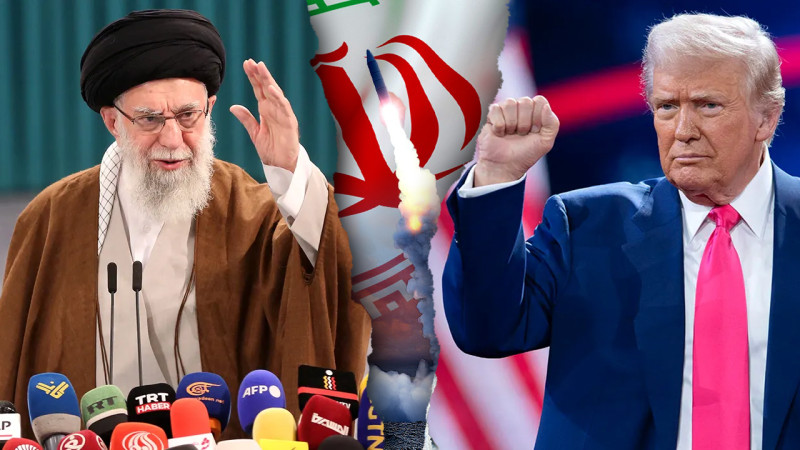
The IRGC, a cornerstone of Iran's military might, has repeatedly asserted that the Strait of Hormuz will remain closed until the U.S. lifts its blockade on Iranian ports. This stance, in direct opposition to the Iranian government's public declarations, underscores the internal divisions within Iran's power structures. Trump, meanwhile, continues to assert that any vessel paying tolls to Iran for transit through the strait will be intercepted by the U.S. Navy. This escalation, of course, only adds fuel to the fire, making it clear that the situation is far from resolved.
Look, this kind of brinkmanship is nothing new in the Middle East. But what’s particularly notable here is how Trump has used the Strait of Hormuz as a political football, leveraging it to score points both domestically and internationally. And then — get this — the U.S. Navy has been placed in a precarious position, tasked with enforcing a blockade that Iran sees as a violation of its sovereign rights. It’s a recipe for disaster, really. But Trump seems to thrive in these high-stakes situations, where diplomacy often takes a backseat to grandstanding.
The Straits of Hormuz: A Critical Choke Point
Situated between the Persian Gulf and the Gulf of Oman, the Strait of Hormuz is a critical waterway for global trade, particularly for oil transport. Approximately 30% of the world's seaborne oil and natural gas passes through this narrow channel, making it a strategic asset of immense importance. Any disruption in this flow has far-reaching implications for global energy markets and geopolitical stability. Trump’s intervention in this delicate balancing act has only served to further destabilize an already tense region.
And get this: the Strait of Hormuz has been a focal point of geopolitical maneuvering since the Iran-Iraq War in the 1980s. During that conflict, both countries used the strait as a strategic weapon, and the legacy of that conflict continues to haunt the region today. In the context of ongoing tensions with the United States, the strait has once again become a flashpoint, with Iran using its control over the waterway as a lever in its standoff against the U.S..
blockquote> “The Strait of Hormuz is a critical chokepoint,” said a senior analyst, speaking on condition of anonymity. “Any disruption here has global repercussions, and Trump’s handling of this situation only adds to the uncertainty.”So, where does this leave us? The situation remains fluid, with both Iran and the U.S. trading barbs over the terms of a potential peace deal. The Strait of Hormuz, it seems, will continue to be a crucial battleground in the ongoing geopolitical chess match between these two nations.
For now, the geopolitical waters surrounding the Strait of Hormuz remain as tumultuous as ever, with Trump’s grandstanding adding yet another layer of complexity to an already fraught situation. As the U.S. and Iran continue their dance of brinkmanship, the world watches with bated breath, hoping that sanity will prevail before the situation spirals out of control.