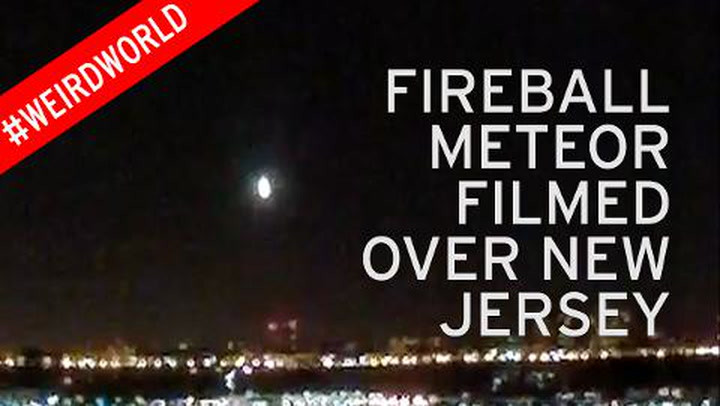
The skies over the northeastern United States were illuminated with a dramatic fireball meteor on April 7, 2026, a rare daytime fireball that left witnesses in awe. The fiery spectacle was visible across New Jersey, Pennsylvania, and Delaware, with reports from hundreds of witnesses.
Meteor Fireball's Journey Across the Northeast
The meteor, a spectacular example of a bolide, streaked through the sky at an astonishing speed of 30,000 mph before disintegrating. It traveled an impressive 117 miles, lasting only seconds but leaving an unforgettable impression. According to NASA, the object was a shooting star, a term that appropriately describes the fleeting yet intense visual impact of the fireball.
The Science Behind the Fireball Meteor
This fireball meteor was not part of any known meteor shower but rather a sporadic meteor. These events are more common during specific periods, especially from February to April, when the rate of bright meteor appearances can increase by 10% to 30%. The phenomenon is attributed to the Earth's orbit intersecting with streams of debris from asteroids and comets.
Despite the intense light and noise, no meteorite fragments have been confirmed on the ground, suggesting the object fully vaporized in the atmosphere. Fireballs are typically defined as meteors brighter than magnitude -4, which is about the same brightness as the planet Venus in the morning sky.
Public Reaction and Future Fireball Sightings
The sighting has sparked curiosity and excitement among the public, with many sharing videos and accounts of the event on social media. The American Meteor Society (AMS) and the International Meteor Organization (IMO) have been collecting reports to better understand the phenomenon.
With fireball sightings surging across the U.S. in recent months, NASA and other astronomical organizations are closely monitoring the skies. The first quarter of 2026 has seen a significant increase in large fireball events, prompting further investigation into potential changes in the near-Earth meteoroid environment.
Whether this trend continues or if future sightings will occur is still unclear. However, one thing is certain: the sky will continue to captivate and awe us with its celestial wonders. NASA’s ongoing efforts to track and explain these events are crucial to enhancing our understanding of the cosmos. When the next fireball event will occur is anyone's guess.