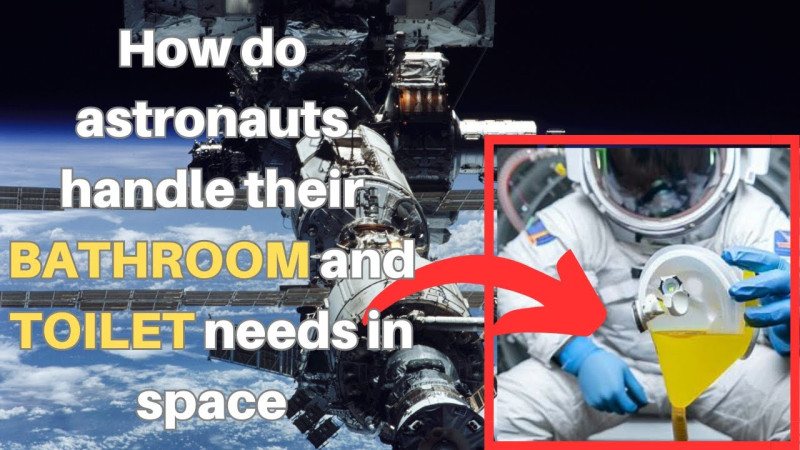
The Artemis mission is an unprecedented leap for humanity, much like Odysseus’s journey, but this time, the odyssey isn’t to the mythical underworld but to the lunar surface. The Artemis II mission, scheduled for March 2026, will carry four astronauts to the vicinity of the Moon — including Reid Wiseman and Victor Glover — and this time, they will have the added challenge of navigating the complexities of zero gravity. Every detail matters, even the most mundane tasks like eating and using the bathroom. So, how do astronauts go to the bathroom in space?
The Space Loo: A Revolution in Zero Gravity
The challenges of human space travel have evolved, and so have the solutions. One of the most critical innovations is the space toilet, a marvel of modern engineering. These toilets use powerful suction mechanisms to remove waste, a necessity in the absence of gravity. The Artemis II mission, set to launch in March 2026, will test these advanced toilets in real-world conditions. Astronauts will spend 10 days inside the Orion capsule, a confined space of only nine cubic meters, making efficient and hygienic waste management crucial.
Orion’s State-of-the-Art Sanitary Solutions
The Orion spacecraft, designed by NASA, is equipped with a toilet specifically tailored for the peculiarities of space travel. This innovative design ensures that astronauts can manage their sanitation needs without compromising their mission. The toilet system uses a combination of air pressure and vacuum to collect and store waste, making it an essential component of the spacecraft.
Privacy and Comfort in a Confined Space
In a mission like Artemis II, privacy and comfort are as important as functionality. The Orion capsule is designed to offer astronauts a semblance of privacy while using the toilet. The toilet system is enclosed, providing a private space within the capsule. This design ensures that astronauts can perform their bodily functions without feeling self-conscious or uncomfortable.
“When you're in zero gravity, how do you go to the toilet?" NASA scientists have spent more than $23 million to ensure that Artemis II astronauts can handle this basic human need effortlessly. The answer lies in advanced technology and meticulous design.