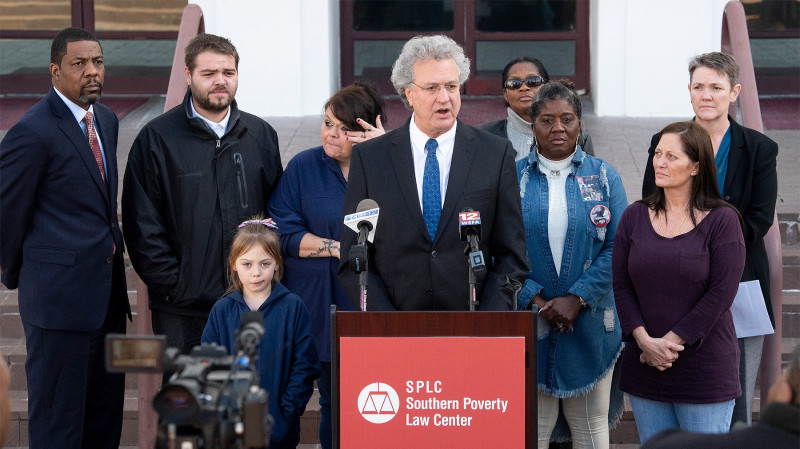
The Southern Poverty Law Center (SPLC) finds itself at the center of a storm after a federal grand jury indicted the organization on multiple counts of wire fraud and money laundering, raising questions about its methods and motives. The SPLC investigation reveals dark secrets that challenge the group's long-standing reputation as a champion of civil rights.
The Indictment: A Stunning Racket to Monitor Hate Groups
The Federal Grand Jury in Montgomery, Alabama, indicted the SPLC on 11 counts, including wire fraud, false statements, and money laundering, alleging that the group improperly raised millions of dollars to secretly pay extremist group leaders for inside information. The U.S. Attorney's Office for the Middle District of Alabama Northern Division has also filed two forfeiture actions to recover funds, painting a picture of a group that has allegedly deviated from its mission. The SPLC investigation reveals that the center used a vast network of paid informants to infiltrate and monitor groups like the Ku Klux Klan. The Justice Department alleges that the SPLC raised millions in donations under the guise of fighting hate, but instead used these funds to pay informants who were members of extremist groups.
The Counterpoint: Tensions Between the SPLC and Conservatives
The SPLC has long been a lightning rod for conservative groups, who accuse it of unfairly targeting religious and political organizations. Republicans have criticized the center for labeling groups like the Family Research Council and Alliance Defending Freedom as hate groups, despite the groups' insistence on their mainstream credentials. The SPLC investigation has brought these tensions to the forefront, with some arguing that the indictment is a politically motivated attack on a civil rights organization. The SPLC itself has vehemently denied the charges, calling them "false allegations" and expressing outrage at what it views as a politically motivated attack. The SPLC founder Julian Bond, an African American activist, established the center with a mission to fight white supremacist groups, and the center has historically used civil litigation as its primary tool to challenge these organizations.
The SPLC's Atlanta Footprint: A Network of Legal Battles
Despite its Atlanta footprint, the SPLC's legal battles have raised eyebrows among those who question the center's methods and motives. The group's lawsuit history is extensive, with the SPLC investigation revealing that the center has filed numerous lawsuits against organizations and individuals it labels as hate groups. The center's use of paid informants to gather information on extremist groups has been a contentious practice, with critics arguing that it amounts to entrapment and manipulation. The SPLC investigation reveals that the center's tactics have led to a complex web of legal battles, with some questioning the ethics of the organization's methods.
The SPLC investigation sheds light on the darker side of a once-revered organization, raising questions about its methods and motives. Let this be a lesson to all: the Southern Poverty Law Center, once a symbol of hope and justice, is now a cautionary tale of how power and conviction can lead to corruption and deceit.