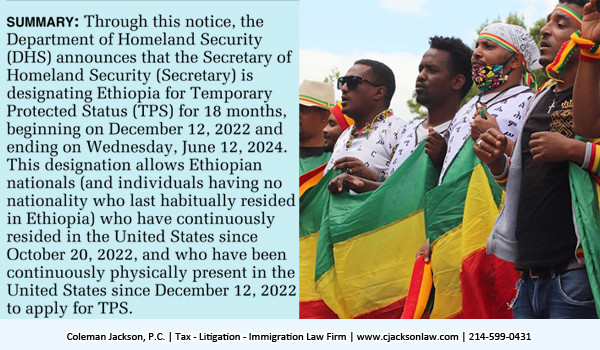
In a dramatic turn of events, the Trump administration's efforts to end Temporary Protected Status (TPS) for Ethiopians living in the U.S. have been met with a significant legal roadblock. A federal judge in Massachusetts, U.S. District Judge Brian Murphy, has issued an order halting the termination of TPS for up to 5,000 Ethiopian nationals, throwing the fate of these individuals into the hands of the Supreme Court.
Judicial Intervention: The Legal Twist
This sudden halt brings a glimmer of hope for thousands of Ethiopians who had been on the brink of losing their legal status in the U.S. Judge Murphy's decision, made on Wednesday, underscores the complexity of immigration law and the importance of due process.
The judge's ruling wasn't a reversal of the Department of Homeland Security's (DHS) decision to terminate TPS for Ethiopia. Instead, it merely postpones the effective date of the termination. This legal maneuver means that while the DHS's termination decision remains, the practical impact of that decision is delayed.
In his ruling, Judge Murphy highlighted that the Trump administration likely disregarded the rules laid out by Congress when it decided to end Ethiopia's TPS. The judge found that the administration's actions were "pretextual," meaning the actual reasons behind the termination were not what was publicly stated.
This decision marks a significant legal setback for the DHS and the Trump administration, which has been trying to terminate TPS for 13 countries, including Ethiopia. Legal scholars point out that such a decision could set a precedent for future TPS cases, influencing how the government handles similar situations in the future.
Supreme Court Showdown
Following the judge's decision, the Trump administration has taken the next step in its legal battle. An emergency petition has been filed with the Supreme Court, seeking to overturn the lower court's ruling and reinstate the termination of Ethiopia's TPS. This move is reminiscent of the administration's aggressive stance on immigration policies, often resorting to the highest court in the land to secure its desired outcomes.
The Supreme Court's involvement adds a layer of uncertainty to the situation. The court's conservative leanings, with a 6-3 majority, could potentially favor the Trump administration. However, legal experts caution that the court might also consider the implications of disrupting the lives of thousands of individuals who have built their lives in the U.S. under the protection of TPS.
The Supreme Court's decision will be pivotal. Depending on the outcome, it could either validate the administration's approach to TPS terminations or reinforce the importance of following legal procedures and due process in such matters.
A look at past cases involving TPS terminations reveals a mixed bag of outcomes. Some have been upheld, while others have been challenged and reversed, adding to the unpredictability of this situation.
Impact on Ethiopian Immigrants
For Ethiopian nationals living in the U.S., the judge's decision brings a temporary reprieve. Many of these individuals have been in the country for years, contributing to their communities and building lives under the protection of TPS. The termination of their status would have meant returning to a home country that may not offer the same safety or opportunities.
While the legal battles continue, these immigrants are left in limbo, their futures hanging in the balance. For them, the delay is both a relief and a reminder of the ongoing uncertainty. The Supreme Court's decision will either secure their status or force them to confront the realities of potential deportation.
Legal experts and advocates for immigrant rights see this as a pivotal moment, highlighting the need for a more compassionate and fair approach to immigration policies. The case underscores the human face of immigration, where policies and legal decisions can drastically alter the lives of individuals and families.
Sound familiar? Remind you of anything?
You might be thinking, 'This sounds like a lot of legal back-and-forth with no clear resolution in sight.' And you'd be right. Immigration cases often drag on for years, leaving those affected in a state of constant uncertainty. This situation is no different, with the Supreme Court's decision potentially taking months to materialize. But here's the thing: for the thousands of Ethiopians living in the U.S., this delay is more than just a legal technicality—it’s a lifeline.
"This decision underscores the importance of due process and the rule of law in immigration policies. It’s a reminder that legal protections are not just abstract concepts but have real, tangible impacts on people’s lives." - Immigration Law Expert, April 2026.