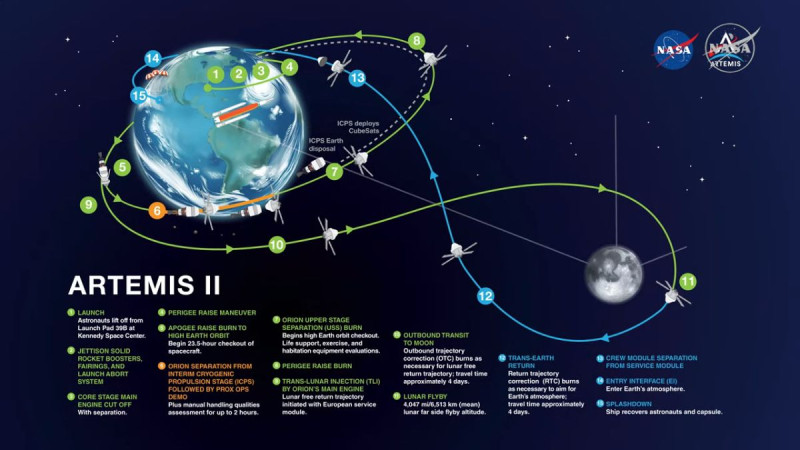
NASA's Artemis II mission has captured global attention. The spacecraft carrying a crew of four astronauts, including the first woman to orbit the moon, is on a critical leg of its journey. After a successful lunar flyby, the crew is returning to Earth, with the splashdown scheduled for Friday, April 10, off the coast of San Diego.
The Lunar Flyby: A Historic Moment in Space Exploration
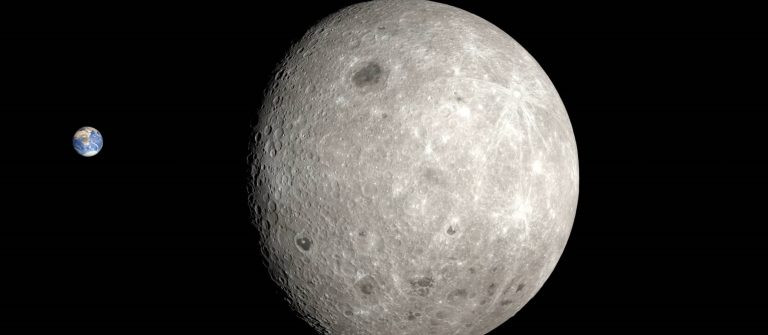
As the Artemis II crew approached the moon on April 6, the mission made history. At 1:56 p.m. EDT, the astronauts reached 248,655 miles from Earth, surpassing the farthest distance ever traveled by humans — a record previously set by Apollo 13 in 1970. The flyby was a crucial test for NASA's ambitious plans to return astronauts to the lunar surface, a goal not achieved since the Apollo missions ended in 1972. The moment marked a triumph for space exploration, showcasing the advancements in technology and the relentless pursuit of scientific discovery. The crew consisted of seasoned astronauts led by Commander Reid Wiseman, accompanied by Victor Glover, Christina Koch, and Jeremy Hansen — each bringing a unique expertise to the mission. As they executed the flyby, the crew captured breathtaking images of the lunar surface, offering a fresh perspective of the moon's rugged terrain and craters.
Journey Home: The Countdown to Splashdown
The Artemis II mission is a pivotal step in NASA's Artemis campaign, which aims to establish a sustainable human presence on the moon. With the lunar flyby complete, the crew is now hurtling back towards Earth, exiting the moon’s sphere of influence and accelerating under Earth's gravitational pull. The spacecraft is expected to splash down at approximately 8:07 p.m. on Friday, April 10, in the Pacific Ocean off the coast of San Diego. The return leg of the journey is fraught with challenges. As the spacecraft re-enters Earth's atmosphere, it will experience extreme temperatures and pressures, stressing both the spacecraft and the crew. The recovery team, led by Lili Villarreal, will be on standby, prepared to execute a meticulously planned procedure to retrieve the astronauts and the spacecraft. The splashdown will mark the end of a 10-day mission that has tested the capabilities of the Orion capsule and paves the way for future crewed lunar landings.
Celebrating the Artemis II Mission: A New Era of Lunar Exploration
The Artemis II mission has not only been a technical marvel but also a cultural phenomenon. The mission's progress has been closely followed by space enthusiasts worldwide, with live updates and stunning images shared across various platforms. The public's keen interest has been fueled by the mission’s historic significance and the promise of a new era of lunar exploration. NASA's Artemis campaign aims to return astronauts to the moon's surface for the first time since 1972, laying the groundwork for future missions to Mars. The mission's success will have profound implications for space policy and scientific research — the Artemis II crew's return to Earth is about more than just a splashdown; it's about the future of human spaceflight. It’s a testament to the resilience and innovation of the human spirit, pushing the boundaries of what is possible in the cosmos. As the Artemis II crew prepares for their final descent, the world watches in anticipation, eager to see the next chapter in the saga of lunar exploration unfold. The anticipation is palpable in the fluorescent glare of the briefing room, where journalists wait with bated breath for updates, their phones buzzing in pockets with the latest developments. The hum of excitement is palpable, a testament to the collective hope and curiosity that space exploration inspires — the mission will be broadcast live for the world to witness.
“The Artemis II mission is a critical step in our journey back to the Moon and on to Mars. It’s a testament to human ingenuity and our unyielding spirit of discovery.”
— Bill Nelson, NASA Administrator
As the Artemis II crew prepares for their return to Earth, the world watches with bated breath, eager to witness the next chapter in lunar exploration. This mission is more than just a test flight; it's a beacon of hope and a testament to humanity's relentless pursuit of the cosmos.