In the fluorescent glare of the briefing room, the atmosphere was tense as the United Nations Security Council convened. The vote on a resolution aimed at reopening the Strait of Hormuz had been repeatedly watered down, but the outcome was still uncertain. The Strait of Hormuz is a critical maritime choke point, through which a significant portion of the world's oil supply passes. As the hum of phones buzzing in pockets filled the room, it was becoming abundantly clear that this was more than just a diplomatic maneuver.
The Diplomatic Showdown
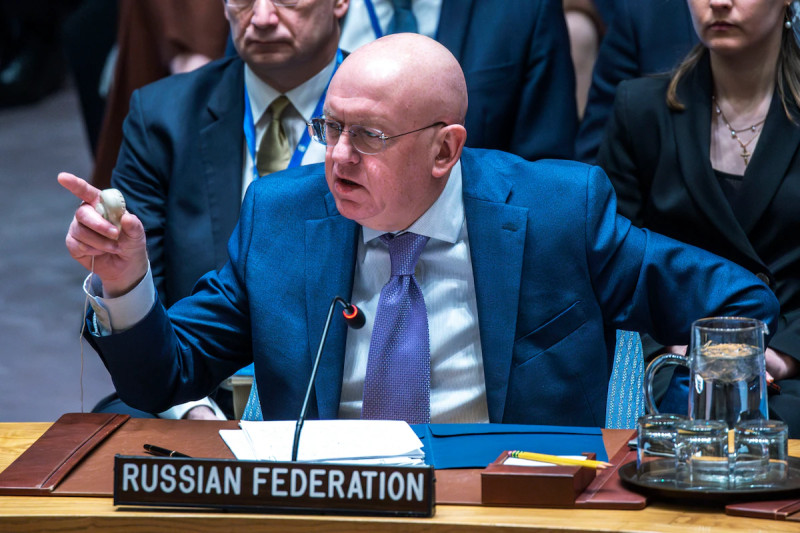
The resolution, presented by Bahrain, aimed to encourage countries to coordinate defensive efforts to protect commercial shipping in the Strait of Hormuz. The 15-member Security Council voted 11 in favor, with China and Russia casting their vetoes, and Pakistan and Colombia abstaining. This was a significant moment in international diplomacy, as it underscored the deep divisions within the Security Council over how to handle the Strait of Hormuz crisis.
China and Russia's vetoes were not entirely surprising, given their longstanding positions on international interventions and the Strait of Hormuz. China, for instance, has significant economic interests in the region, and Russia has been a staunch ally of Iran, which has control over the Strait. However, the vetoes sent a clear message that the international community's efforts to reopen the Strait would be met with significant resistance.
In the aftermath of the vote, the diplomatic fallout was immediate. Bahrain's Foreign Minister, Abdullatif bin Rashid al-Zayani, expressed disappointment. “The resolution was intended as a step toward a permanent solution that will ensure navigational freedom and the protection of commercial shipping in the Strait of Hormuz,” he said, emphasizing the importance of the Strait to global trade and energy security.
Economic and Geopolitical Implications
The Strait of Hormuz is a vital maritime chokepoint, through which a fifth of the world's oil supply passes. The failure of the UN Security Council to pass a resolution on freedom of navigation in the Strait has significant economic and geopolitical implications. The region is already a hotbed of geopolitical tension, with Iran's actions often viewed as provocative by Western nations. The vetoes by China and Russia could exacerbate these tensions, as Western nations might perceive these actions as support for Iran's blockade of the Strait.
The economic implications are equally alarming. Any disruption in oil supply through the Strait of Hormuz could lead to a significant spike in global oil prices, affecting economies worldwide. The resolution, which aimed to coordinate defensive efforts, was seen as a crucial step in ensuring the smooth flow of oil and protecting global energy security. The vetoes by China and Russia could therefore be seen as a threat to global economic stability.
—This is not the first time China and Russia have used their veto power to block UN Security Council resolutions. Their actions have often been interpreted as a means to counter Western influence and maintain their strategic interests.
The Road Ahead
As the international community grapples with the implications of the vetoes, the focus will now shift to alternative solutions. While the UN Security Council resolution may have failed, other diplomatic efforts are likely to be explored. The Strait of Hormuz remains a critical issue, and the global community's reliance on the Strait for oil supply means that a resolution to the crisis is imperative. The vetoes by China and Russia have underscored the challenges ahead, but they have also highlighted the need for a coordinated international response.
“The vetoes by China and Russia are a blow to the international community's efforts to ensure the smooth flow of oil through the Strait of Hormuz,” said a senior diplomat. “But it's not the end of the road. We will continue to explore all diplomatic avenues to ensure the freedom of navigation in this crucial waterway.”
“What today's vetoes make clear is that Russia and China have their own agenda, and it's not compatible with the rest of the world's interest in ensuring a smooth flow of oil through the Strait of Hormuz,” said a senior US diplomat.
“Russia and China have made it clear that they have their own agenda and it's not compatible with the rest of the world's interest in ensuring a smooth flow of oil through the Strait of Hormuz.” — Senior US Diplomat