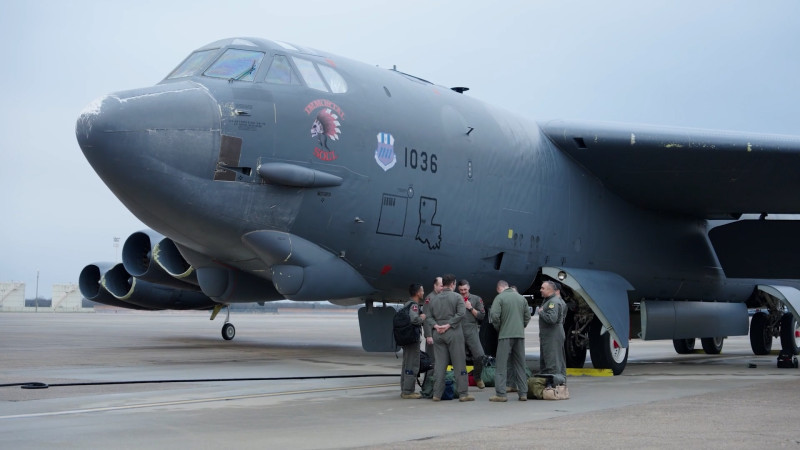
The B-52 Stratofortress, an iconic long-range, heavy bomber, continues to stand as a testament to American air power. Since its debut in the 1950s, the B-52 bomber has remained a cornerstone of the United States Air Force's strategic arsenal, evolving through numerous upgrades to remain relevant in the 21st century.
Historical Context and Design Evolution
The B-52 bomber made its first flight on April 15, 1952, and entered service in 1955. Designed by Boeing, it was originally conceived as a nuclear bomber, capable of delivering nuclear weapons to distant targets. The B-52's design features eight turbojet engines and a distinctive swept-wing configuration, which has become synonymous with its silhouette. Throughout its service, the B-52 has undergone significant upgrades, including the addition of advanced avionics, precision-guided munitions, and enhanced defensive systems. These upgrades have ensured that the B-52 bomber remains a critical component of the U.S. military's strategic capabilities
Operational Versatility and Global Reach
The B-52's long-range capabilities and versatility have made it a valuable asset in various military operations. During the Vietnam War, the B-52 bomber played a crucial role in strategic bombing missions, demonstrating its ability to carry large payloads over long distances. In more recent conflicts, such as Operation Desert Storm and the War in Afghanistan, the B-52 has been deployed for precision bombing and close air support, showcasing its adaptability to modern warfare. The B-52's ability to carry a wide range of ordnance, including conventional bombs, cruise missiles, and even nuclear weapons, makes it a versatile platform for various mission types.
Technological Improvements and Modernization
Despite its age, the B-52 continues to receive upgrades to keep it relevant in an ever-changing battlefield. These include the installation of advanced radar systems, enhanced communication capabilities, and the integration of precision-guided munitions. These upgrades have improved the B-52's accuracy and effectiveness in modern warfare. Additionally, the ongoing modernization efforts, known as the Compass Call upgrade program, aim to extend the B-52's service life well into the 2040s, ensuring it remains a vital part of the U.S. military's strategic arsenal. The B-52 bomber has also been equipped with new engines and avionics, further enhancing its performance and operational readiness.
“The B-52 is a testament to the enduring value of strategic investments in military technology. Its ability to adapt and evolve has made it an indispensable asset for the U.S. Air Force,” said an unnamed defense analyst.
As new threats emerge, the B-52 bomber continues to evolve, ensuring that it remains a critical component of U.S. military strategy for years to come. The 2026 budget proposal includes a significant investment in further modernizing the B-52 fleet, reflecting its enduring importance in the face of global challenges. This investment aims to enhance the B-52's capabilities, ensuring it remains a formidable presence in the skies.