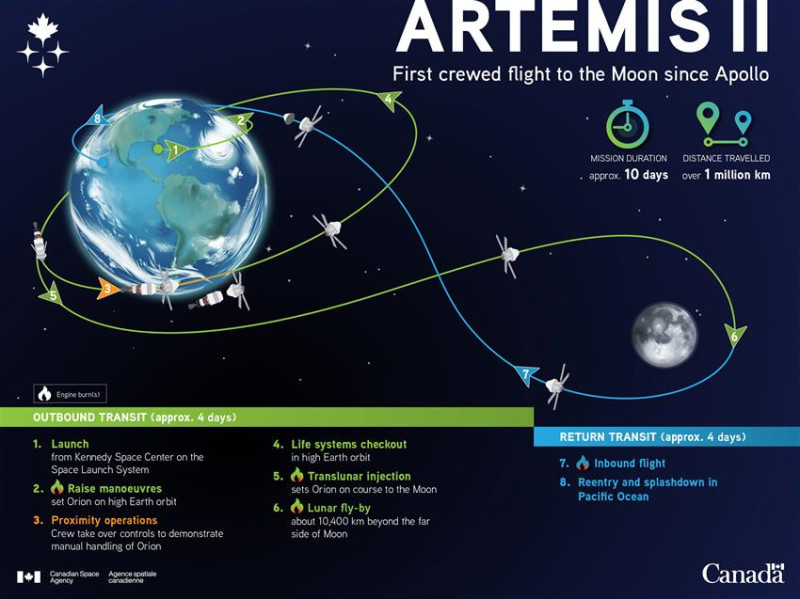
The Artemis II mission is rapidly accelerating towards the moon, but how fast is this lunar voyage really going? As of 2026-04-04 09:07:56, the spacecraft has left Earth orbit and is hurtling towards the moon at a jaw-dropping speed of 24,500 mph. The Artemis II mission, which launched from Kennedy Space Center, is a pivotal step in NASA's ambitious plans to return to the moon.
The Speed and Distance of Artemis II
The mission is breaking records with its speed and distance. At its peak, Artemis II will travel about 250,000 miles from Earth, eclipsing the distance record set by Apollo 13. This journey is not just about breaking records; it's about testing new technologies and capabilities essential for future lunar missions.
During the translunar injection (TLI) burn, the spacecraft reached a mind-boggling 24,527 miles per hour, which is crucial for escaping Earth's gravitational pull and heading towards the moon. The speed during this phase is a testament to the power and precision of the spacecraft's engines. Let's not kid ourselves; the data is damning in showcasing the sheer power of Artemis II's propulsion system.
Artemis II's Journey: Earth Orbit to Lunar Destination
After spending about 25 hours in Earth orbit, Artemis II astronauts fired their main engine for nearly six minutes, propelling the ship to a velocity of 24,500 mph, precisely the speed required to escape Earth's gravitational pull. This crucial maneuver, known as the translunar injection burn, marks the beginning of the spacecraft's journey to the moon. The astronauts’ skill and precision during this phase are crucial, as any deviation could jeopardize the entire mission. The crew—Wiseman, Glover, Koch, and Hansen—have undergone rigorous training to handle such high-stakes maneuvers.
As the Artemis II crew blazes towards the moon, the world watches with bated breath. The mission is a testament to human ingenuity and perseverance, pushing the boundaries of space exploration. The goal of the Artemis program is to land humans on the moon's Southern region and to build a moon base.
NASA's Artemis II mission is not just a journey to the moon; it's a leap towards the future of space exploration. The mission aims to pave the way for future lunar landings, with Artemis III potentially setting down two astronauts on the lunar surface as early as 2028. This mission is a stepping stone toward establishing a long-term human presence on the moon, laying the groundwork for future missions to Mars and beyond.
The launch window for Artemis II ran from April 1 to April 6, and the mission is currently on track, with all systems confirmed "go" for launch. The helium flow repairs have held under pressure during final tanking tests, ensuring the spacecraft's propulsion system is operational.
As Artemis II continues its journey, the world awaits the first pictures from space of Earth taken by the Artemis II crew. These images will provide a unique perspective on our planet and serve as a reminder of the incredible achievements of human spaceflight. The crew has been diligently conducting their final flight suit checks, ensuring they are prepared for the challenges ahead.
Here's what nobody's asking: What if Artemis II encounters unforeseen challenges? The mission's success hinges on the crew's ability to adapt to any obstacles. The data is damning in showcasing the sheer power of Artemis II's propulsion system, but what about its resilience in the face of adversity?
As the Artemis II mission progresses, the world watches with anticipation. The Artemis II crew's journey is a testament to human ingenuity and perseverance, pushing the boundaries of space exploration.