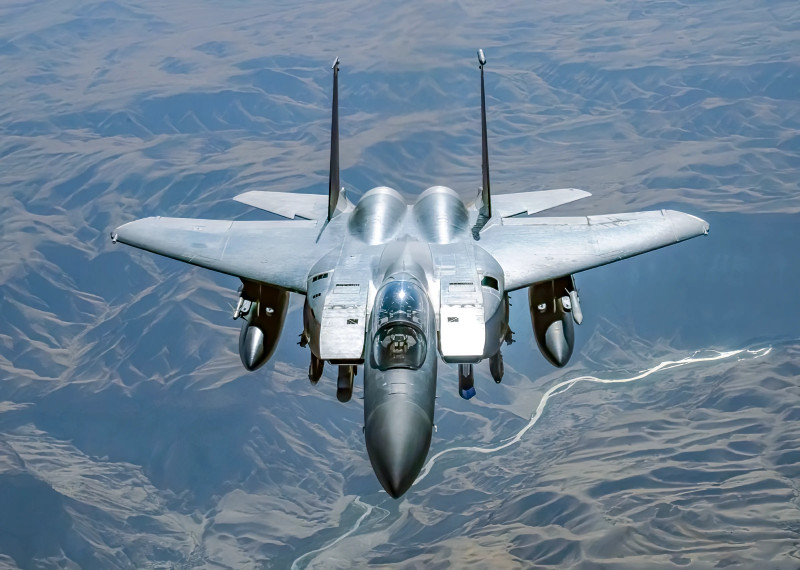
On Friday, U.S. forces found themselves in a tense and perilous situation as an F-15 was downed over Iran, marking the second U.S. aircraft to be lost in the region this month. The F-15E, a two-seat, twin-engine strike fighter, was shot down with devastating consequences. The incident has raised deep concerns about the escalating tensions between the United States and Iran, while also highlighting the risks and challenges faced by U.S. forces in the region.
The Intense Shooting Down Incident
In the early hours of the day, the F-15E disappeared from radar screens and crashed under circumstances that remain unclear. One of the two crew members was later rescued, but search efforts continue for the second airman. The incident occurred near the Strait of Hormuz, a strategically critical waterway that has long been a flashpoint for regional conflicts and geopolitical tensions.
The F-15E, also known as the Strike Eagle, is a versatile and powerful aircraft, designed for precision strikes and ground attack missions. Its loss has sent shockwaves through the U.S. military and political establishment, raising questions about the effectiveness of current air defense systems and the potential for further escalation.
As the world watched in horror, an A-10 Warthog crashed near the Strait of Hormuz, adding to the growing list of losses. The Warthog was part of a high-risk combat search and rescue operation for the downed F-15E crew. The apparent loss of an A-10 in such a high-risk operation underscores the dangers faced by U.S. forces as they attempt to recover their fallen comrades and maintain control over the region.
Another loss in the region, the A-10 Thunderbolt II also known as the A-10 Warthog, crashed amid a high-risk combat search and rescue operation conducted by the US Air Force.
“The loss of an F-15E and an A-10 in such a short period is an alarming development. It underscores the need for increased vigilance and preparedness in the face of escalating tensions. The U.S. must ensure that it has the resources and capabilities to respond effectively to any future threats.” – General Robert Brown, U.S. Air Force
The Desperate Search for Survivors
In the wake of the downing, a desperate search operation is underway to locate the remaining missing airman. U.S. forces are engaged in a high-stakes rescue mission, navigating treacherous terrain and the ever-present threat of further attacks. The situation is further complicated by Iranian forces, who are said to be urging civilians to find survivors and offering commendations for their capture or killing. The U.S. military faces a daunting task in locating and extracting the missing airman, who is believed to have ejected over Iranian territory.
The U.S. is currently grappling with the possibility of a prolonged rescue mission, as Iranian forces have reportedly urged civilians to find survivors. This complex humanitarian and military operation is fraught with danger and uncertainty, but the U.S. remains committed to bringing its airman home
What does this mean for the region?
This incident has raised concerns about the potential for further escalation in the region. The downing of an F-15 and the loss of an A-10 highlight the volatile nature of the conflict and the potential for further losses. The U.S. must remain vigilant and prepared to respond to any future threats, as the situation in the region remains tense and unpredictable.
The incident has also sparked a broader debate about the role of air power in modern warfare. As the U.S. continues to face challenges in the region, it must consider the effectiveness of its air defense systems and the potential for further losses. The U.S. must also be prepared to respond to any future threats, as the situation in the region remains tense and unpredictable. The loss of an A-10 Warthog and F-15E highlight the need for increased vigilance and preparedness.
Think again, about the day U.S. had to scramble to rescue its crew members who may be captured or killed by Iranian civilians.
It's not just about the F-15 shot down in Iran; it’s about the region’s geopolitical chessboard, where A-10 and F-15 fly in the skies. It's about who controls the skies over the Strait of Hormuz and the strategic implications of these losses in a world where the U.S. military's reach is often challenged. Think about the consequences of this particular move, the F-15 shot down and the A-10 crashed.
What does it mean for the region’s future, for the U.S. military? Gone., are the days when the skies over Iran were relatively calm. Now, with the loss of an F-15 and an A-10, the region has entered a new era of uncertainty and danger.