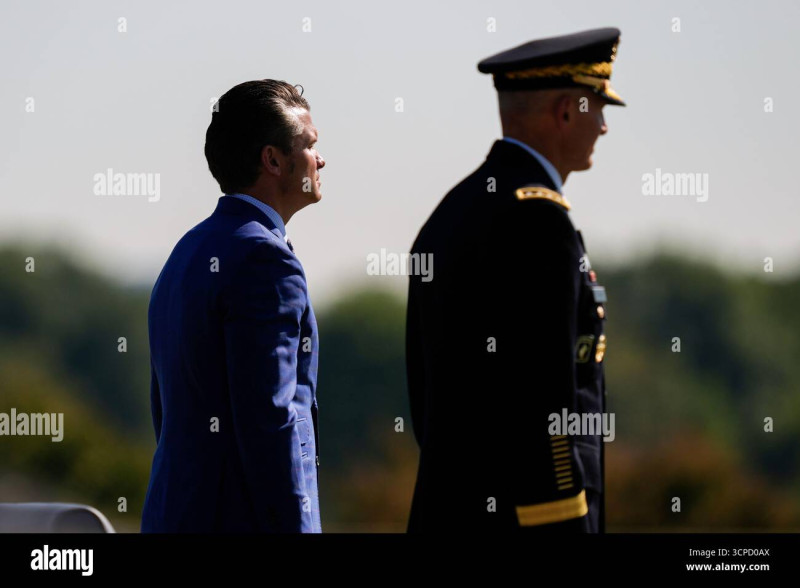
Defense Secretary Pete Hegseth has made a bold move, firing the Army chief of staff and two other generals in a massive shakeup. The latest purge in Pentagon leadership has left many within the military and political spheres speculating about the future of the Army’s command structure. Here’s what we know so far.
Hegseth's Dramatic Ousting of Top Army Leaders
The shake-up began with General Randy George, the Army's chief of staff. On Thursday, Hegseth asked him to retire immediately, a decision that caught many off guard. George, who was expected to remain in his role at least until summer, was replaced by General Christopher LaNeve, the current vice chief of staff, who previously served as Hegseth’s military aide. This abrupt change has sent shockwaves through the ranks, with senior Army officers expressing anger and frustration over the dismissal. They see it as a significant blow to the service's morale during a critical time when the United States is engaged in a conflict with Iran.
The purge didn’t stop there. Hegseth also removed General David Hodne, head of the Army Transformation and Training Command, and Major General William Green Jr.. This move highlights escalating tensions within the Army, particularly over personnel decisions and leadership styles.
The Immediate Impact on Army Operations
With the sudden removal of top generals, the Army is now facing a crucial period of transition. The new leadership, including General Christopher LaNeve, will have to quickly adapt to the changing dynamics and maintain operational efficiency. This shake-up comes at a time when the Army is heavily engaged in the conflict with Iran, and any disruption in leadership could have significant implications on the ground.
Here's the thing: the Army's leadership changes are not just about personalities; they reflect broader issues within the Pentagon. The firing of top generals suggests a deeper conflict between the Defense Secretary and the military leadership, possibly over strategic decisions or policy directions. The move could also be seen as a political maneuver, with Hegseth possibly aligning with specific factions within the government.
As the Army grapples with these changes, the question remains: how will this impact the ongoing conflict with Iran? Will the new leadership bring fresh perspectives and strategies, or will it lead to further instability? The coming weeks will be crucial in determining the new course of the Army's leadership.
The Broader Implications for Military Strategy
The sudden dismissal of top Army leaders raises questions about the broader implications for military strategy and morale. The Army's leadership is crucial for maintaining cohesion and effectiveness, especially during times of conflict. The abrupt changes could lead to confusion and uncertainty among the ranks, affecting the Army’s ability to execute its missions effectively.
Sound familiar? Remind you of anything? Look, abrupt changes in military leadership are not uncommon, but the scale and timing of this shakeup are unprecedented. The ongoing conflict in Iran adds an extra layer of complexity, making it a critical test for the new leadership.
What’s clear is that this is a pivotal moment for the Army. The new leadership will have to navigate not just the immediate challenges of the Iran conflict but also the long-term strategic goals of the Department of Defense. The coming months will be a test of their mettle and the resilience of the Army as a whole.
Hegseth’s move has set the stage for a dramatic shift in the Army’s command structure. As the world watches and the conflict in Iran continues to unfold, the Army’s new leaders will have to prove their mettle in the face of unprecedented challenges. As of now, nobody's watching just how far these ripples will spread throughout the military ranks and into the broader geopolitical landscape.