Imagine having your beliefs about conversion therapy — a controversial psychological practice — abruptly upended by a legal battle that echoes all the way to the Supreme Court. That's the current reality for Colorado, where a recent Supreme Court ruling in Chiles v. Salazar has sparked a national conversation about free speech, religious liberty, and mental health practices.
The Legal Battle: Conversion Therapy and Free Speech
Here's the thing: Chiles v. Salazar is a legal battle that pits Colorado's Minor Conversion Therapy Law (MCTL) against the First Amendment's free speech clause. At the center of it all is Kaley Chiles, a licensed counselor who describes herself as a practicing Christian. Chiles believes that her talk therapy sessions, which sometimes involve Christian faith, are a form of religious speech and thus protected under the First Amendment. She sues for pre-enforcement relief under 42 U.S.C. § 1983, alleging that Colorado's ban on conversion therapy for minors violates her free speech and free exercise rights.
The crux of the issue is whether the ban on conversion therapy for minors constitutes a violation of free speech or religious liberty. The lower courts' failure to apply "sufficiently rigorous First Amendment scrutiny" is what brings the case to the Supreme Court. The Supreme Court's interpretation of the law as viewpoint discrimination and its application to Chiles’s talk therapy is a significant shift in how we consider the legal implications of conversion therapy in Colorado.
The Impact on Mental Health and LGBTQ+ Rights
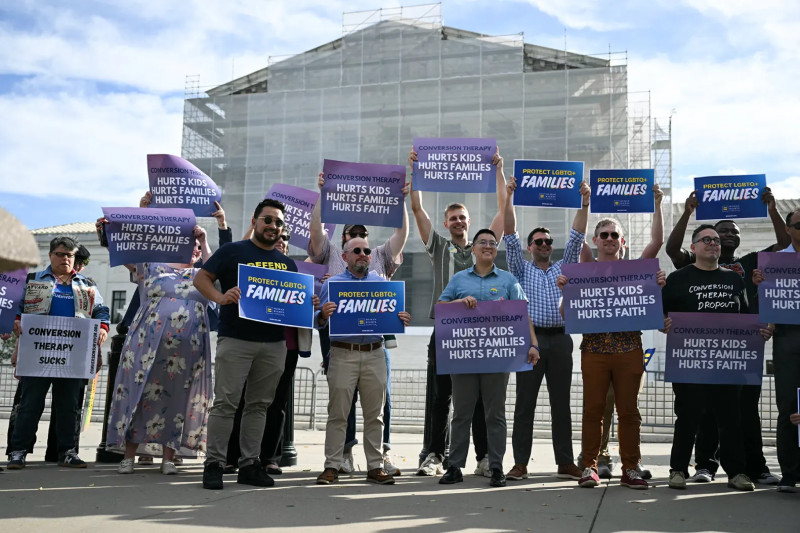
And then — get this — the ruling has broader implications for mental health professionals and the LGBTQ+ community. On one hand, the ruling could seriously affect mental health practices and the legal relevance of standards of care. On the other, it threatens to undermine the progress made in ensuring the well-being of LGBTQ+ individuals, who have long advocated against conversion therapy due to its perceived harmful effects.
The Colorado law's ban on conversion therapy is rooted in medical reports suggesting that the practice is ineffective and harmful. Salazar, the respondent, cites these reports as evidence, while Chiles argues that her counseling is therapeutic and reflects her clients' request for faith-based guidance. This clash of viewpoints underscores the complexity of the issue, where religious beliefs and mental health practices intersect.
The Broader Implications and Future of Conversion Therapy in Colorado
Now, let's talk about the broader impact. The Supreme Court's decision in Chiles v. Salazar is a landmark ruling that could set a precedent for how conversion therapy laws are interpreted across the country. The ruling underscores the importance of free speech and religious liberty, but it also raises questions about the ethical and legal boundaries of mental health practices. Look, we can't ignore the potential backlash from the LGBTQ+ community and mental health professionals who view conversion therapy as harmful and unethical. Sound familiar? Remind you of anything? Sound familiar, anyone?.
Here's a telling anecdote: shortly before the Supreme Court decision, a report from medical experts cited in Salazar's argument suggested that conversion therapy is not only ineffective but also harmful to mental health. But Chiles argued that her counseling is therapeutic and in line with her clients' requests for Christian-based therapy. The Supreme Court’s ruling means Chiles can continue her practice, but it also leaves the door open for ongoing debate and potential legal challenges.
Chiles' win is a win for those who believe in the protection of religious speech and mental health practices. But it's also a cautionary tale for those who advocate for the well-being of LGBTQ+ individuals and the ethical standards of mental health therapy. Remind you of anything? Think about the myriad challenges and controversies that have arisen over the years, especially within the context of conversion therapy in Colorado, and how this case is just one more chapter in this evolving narrative. Would you like to see more transparency in how these decisions are made? Would you like to know more about the legal implications and the impact on the LGBTQ+ community? Ask yourself, would you want to be part of a community where such practices are allowed or banned? What does this decision mean for mental health professionals and their practices?
The ruling has sparked a national conversation about free speech, religious liberty, and mental health practices. It highlights the complexities and controversies surrounding conversion therapy in Colorado and underscores the need for ongoing debate and legal scrutiny. It's a significant milestone in the ongoing struggle for LGBTQ+ rights and the ethical standards of mental health therapy.