As dawn broke over Western Australia on Friday, March 27, 2026, residents awoke to an unnerving sight: an apocalyptic blood-red sky stretching across the horizon. The eerie spectacle was a product of Tropical Cyclone Narelle, which stirred up iron-rich dust from the Western Australian outback, coloring the sky with a rusty, Mars-like hue.
The Science Behind the Blood Red Sky
The dramatic color shift was not a result of supernatural forces, but a rare meteorological event. As Tropical Cyclone Narelle bore down on the coast, its fierce winds lifted iron-rich dust from the Australian outback, turning the sky a fiery red. The phenomenon is known as dust scattering, where light is refracted and scattered by tiny dust particles in the atmosphere, creating a vivid red glow.
— A resident of Denham, a coastal town in Western Australia, described the scene as 'incredibly eerie.' “It looked like the end of the world,” they said, their voice trembling with a mix of awe and fear.
The Path and Impact of Cyclone Narelle
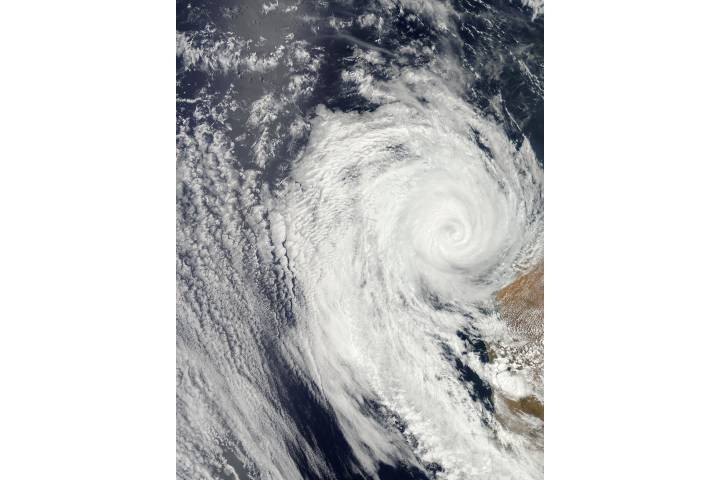
Tropical Cyclone Narelle first formed over the Indian Ocean and intensified rapidly, becoming a Category 4 system. It was the first cyclone in over 20 years to traverse three different Australian regions. As it approached the western coast, the cyclone stirred up massive dust storms, causing the sky to turn a dramatic and eerie blood-red, particularly noticeable in Shark Bay and Denham.
While the red sky was a spectacle, the cyclone itself posed significant risks. Residents were warned of potential flooding, power outages, and structural damage. — The cyclone's impact on the region remains to be seen, with residents braced for potential aftershocks.
The Global Attention and Future Outlook
The eerie red sky in Australia sparked headlines globally, drawing attention to the power and unpredictability of tropical cyclones. As climate change continues to fuel more intense and frequent storms, such dramatic events may become more common — raising questions about preparedness and resilience.
For now, Western Australia’s residents continue to grapple with the aftermath — and the eerie memory — of Tropical Cyclone Narelle and its blood-red sky.
Stay tuned for updates and prepare for the next round of climate-accelerated extreme weather events.