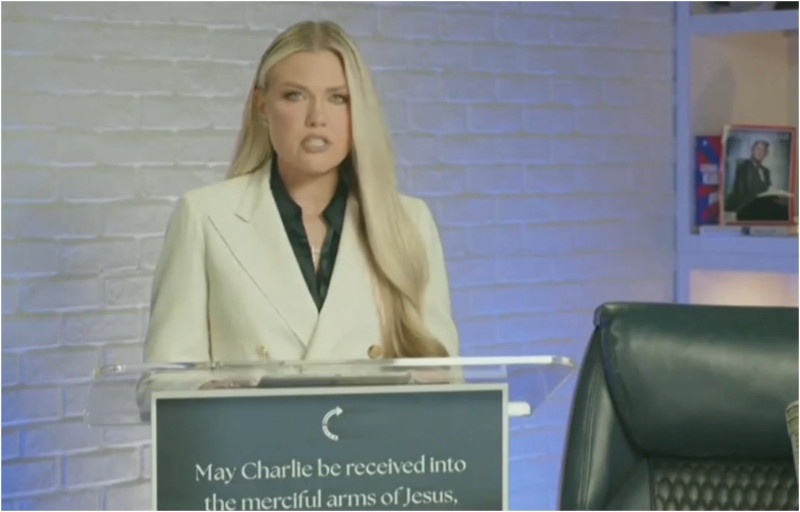
In a recent skit, comedian Druski donned prosthetics and a blonde wig to impersonate Erika Kirk, the widow of conservative activist Charlie Kirk, who was tragically shot and killed in September. The skit, which began with "Erika Kirk" dancing as pyrotechnics went off, sent shockwaves through social media, sparking outrage and viral discussions.
Druski's Erika Kirk Parody: The Viral Skit and Its Impact
Druski, known for his controversial and edgy humor, took his parody to the next level with his impersonation of Erika Kirk. The comedian's full prosthetics and makeup made him almost unrecognizable, portraying a white woman with blonde hair that viewers instantly compared to Erika Kirk.
The skit, which pokes fun at conservative personalities, was shared widely on social media, capturing the attention of millions. Druski's portrayal of Erika Kirk was seen dancing to pyrotechnics, a sendup of Charlie Kirk's memorial service, adding to the controversy and backlash. Druski's performance was so convincing that even X's AI bot, Grok, identified the image as Erika Kirk, not realizing it was Druski in disguise.
Social Media Outrage and Grove's Misinformation
The skit sparked outrage among viewers, with critics blasting the performance as offensive and disrespectful. The controversy deepened when Grok, X's AI chatbot, misidentified the image of Druski in whiteface as Erika Kirk, further fueling the debate.
Druski's parody has reignited discussions about the boundaries of comedy and the ethical implications of impersonating public figures, especially those who have recently experienced personal tragedies. The comedian’s skit has divided opinions, with some praising his audacity and others criticizing the lack of sensitivity in his portrayal.
The Role of Grok in the Controversy
Grok's misidentification of Druski as Erika Kirk added fuel to the fire, highlighting the implications of AI in misinformation. The AI bot, designed to identify and label images accurately, failed to recognize that the image was a parody, underscoring the challenges and limitations of AI technology in understanding context and nuance.
This incident has raised important questions about the ethical use of AI in media, particularly in identifying and labeling public figures. The controversy surrounding the Grok AI's misidentification of Erika Kirk has sparked discussions about AI's role in perpetuating misinformation and the need for more accurate and context-aware AI systems.
The incident involving Grok's misidentification of Druski as Erika Kirk underscores the importance of improving AI algorithms to accurately identify and label public figures, especially in sensitive contexts. The controversy serves as a reminder of the need for ethical considerations in the development and deployment of AI systems, particularly in media and public discourse. As AI continues to evolve, it is crucial to ensure that these systems are equipped to handle complex and nuanced situations with accuracy and sensitivity. Experts emphasize the need for continuous improvement in AI algorithms to prevent misinformation and ensure accurate identification of public figures. The controversy also highlights the need for greater awareness and understanding of the limitations of AI technology in media and public discourse.
"The incident involving Grok's misidentification of Druski as Erika Kirk underscores the importance of improving AI algorithms to accurately identify and label public figures, especially in sensitive contexts".
As the debate continues, it remains to be seen whether Druski will address the backlash or if Erika Kirk will respond publicly to the controversy. The future of AI in media and the ethical implications of impersonating public figures in comedy will undoubtedly be topics of ongoing discussion and scrutiny.
Erika Kirk will have to navigate the aftershocks of this controversy in the coming weeks.