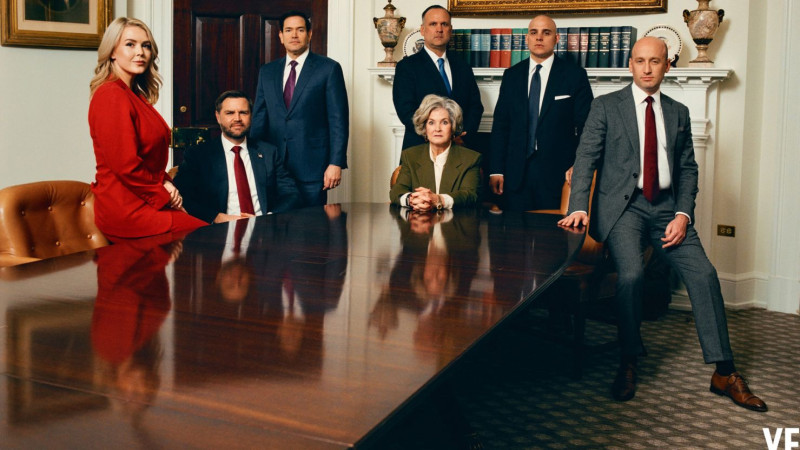
In the digital age, the line between art and controversy often blurs, especially when it comes to political figures. This is precisely what happened with Christopher Anderson's **Vanity Fair White House photos** that sparked a firestorm of reactions online. Christopher Anderson is known for his **extreme close-up photography**, a technique that has become a signature of his work. His recent series, published in Vanity Fair, features up-close and personal portraits of top officials from the Trump administration.
The photos, featuring wide-eyed gazes, blotchy skin, and other intimate details, have drawn both praise and criticism. Critics argue that the photos are unflattering and deliberately so, while supporters view them as a bold form of **photojournalism** that captures the raw, unvarnished reality of the subjects. Anderson, however, stands by his work, emphasizing that these close-ups are a long-standing element of his photographic style. "Very close-up portraiture has been a fixture in a lot of my work over the years," Anderson told an interviewer, explaining that his approach is about capturing the essence of his subjects without any filters .
Among the most notable figures featured in Anderson's photos is Karoline Leavitt, the White House press secretary. Leavitt's portrait, in particular, received significant backlash for its unflattering nature. The extreme close-up, revealing every detail of her face, was widely criticized as being too harsh. However, Anderson defended his choice, stating that his goal was to capture the essence of his subjects in a way that is both honest and authentic .
Beyond Leavitt, the series includes portraits of other key figures in the Trump administration, each captured with the same uncompromising style. The photos have been discussed extensively in media outlets, with some praising Anderson's audacity and others questioning the ethics of such unflattering portrayals. The controversy has highlighted the delicate balance between artistic expression and public perception, especially when it comes to political figures .
In the context of today's **political climate**, the photos have become a symbol of the ongoing debate about **media representation** and the role of photography in shaping public opinion. Vanity Fair's decision to publish these controversial portraits underscores the magazine's commitment to provocative and thought-provoking content. As the **Trump administration** continues to be a focal point of national and international attention, Anderson's work serves as a reminder of the power of photography to capture and convey complex narratives .