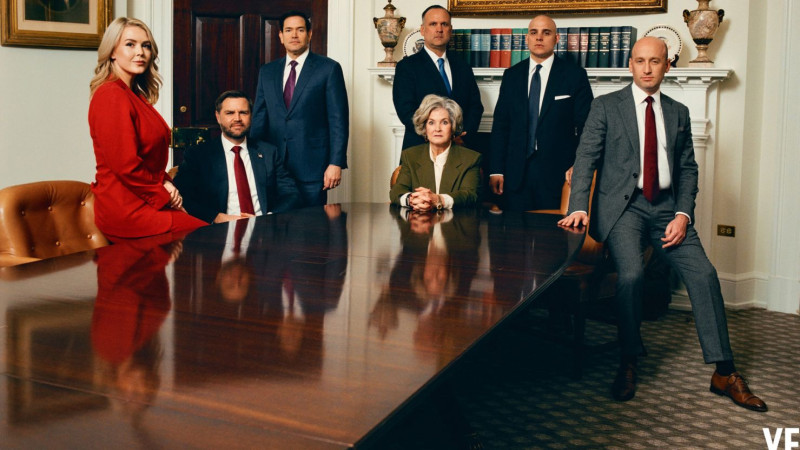
In a move that has sent waves through the political and media landscape, Vanity Fair has once more turned its lens towards the corridors of power, capturing the Trump 2.0 administration in a series of striking, albeit controversial, portraits. Photographer Christopher Anderson's extreme close-ups, featured in the latest issue, have sparked a flurry of reactions online. The images, which offer an unfiltered look at key figures in the Trump administration, have been praised for their raw authenticity and criticized for their unflattering nature.
Christopher Anderson, a renowned photographer known for his unvarnished style, has come under scrutiny for his portrayal of the White House's inner circle. The photographs, which include wide-eyed gazes, blotchy skin, and exaggerated features, have been a topic of intense debate. Some argue that the extreme close-ups reveal a level of vulnerability and authenticity often missing from official portraits. Others view them as deliberately unflattering and exploitative, questioning the intent behind the photographer's choices.
In an interview with The Independent, Anderson defended his artistic approach. He explained that very close-up portraiture has long been a staple in his work, allowing him to capture the "essence" of his subjects. Anderson's defense comes amidst a wave of criticism, particularly from those who feel the images were deliberately altered to portray the administration in a negative light. The photographer, however, maintains that his goal was to reflect a candid and unfiltered reality, stripped of the usual political theater.
"Is this the part where you say we're all evil?" the vice president asked. This question from the Vice President highlights the tense atmosphere surrounding the photo shoot. Anderson's work, which includes shots of Susie Wiles, the White House Chief of Staff, and Marco Rubio, the Secretary of State, has sparked a mix of snickers and serious reflection. Some see the portraits as a candid reflection of the administration's characters, while others view them as a deliberate attempt to discredit the figures.
A statement from Vanity Fair addressed the controversy, asserting that the magazine's intention was to provide a reflection on the first year of Trump's second term. The portraits were meant to offer a glimpse behind the political facade, aiming to present a more authentic depiction of the administration's key players. The magazine's stance has been met with a mix of support and criticism, further fueling the debate over the role of media in shaping public perception.
Despite the controversy, the impact of Anderson's work is undeniable. The portraits have sparked a broader conversation about the nature of political representation and the role of the media in shaping public opinion. While some view the images as a bold and honest portrayal, others see them as a manipulative and unethical attempt to sway public sentiment. As the debate continues, one thing is clear: Vanity Fair's latest foray into the White House has left an indelible mark on the political landscape.