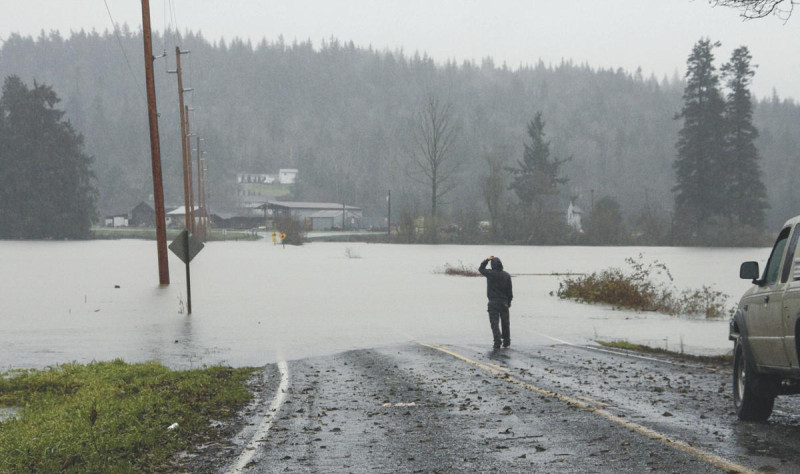
The Pacific Northwest is grappling with unprecedented flooding as an atmospheric river dumps record-breaking levels of rain, causing widespread devastation and forcing mass evacuations. The region has declared states of emergency, with the Skagit River in Washington State reaching historic levels, threatening to surpass previous records and causing catastrophic damage to nearby communities.
The flooding, which has been ongoing since the beginning of the week, has affected multiple counties, with the Skagit River being one of the hardest-hit areas. The river has been surging at an alarming rate, prompting mandatory evacuations in low-lying communities such as Rockport, Hamilton, Marblemount, and Concrete. The U.S. National Weather Service has warned that the river could reach record-breaking levels, leading to what could be described as 'locally catastrophic' flooding.
Governor Bob Ferguson declared a statewide emergency on Wednesday, highlighting the severity of the situation and the need for immediate federal assistance. The emergency declaration will help mobilize resources and support for affected communities. The state has also requested federal funds to aid in recovery efforts.
In Snohomish County, the Grays River reached a record-breaking 33.3 feet in Rosburg, causing significant flooding and damage. The county declared a state of emergency on Tuesday, highlighting the urgent need for coordinated response efforts to mitigate the impacts of the ongoing disaster.
The flooding has not only disrupted daily life in these communities but has also had severe economic and environmental impacts. Flooding has caused road closures, power outages, and extensive property damage. The agricultural valley north of the Skagit River, a major source of produce, could face significant losses due to the floodwaters.
As the situation continues to unfold, residents and officials are bracing for further complications from a second atmospheric river expected to arrive in the coming days, adding to the already dire situation. The impending storm could bring more heavy rain, leading to further rises in river levels and exacerbating the already critical conditions.
In Mount Vernon, the largest city in Skagit County with some 35,000 residents, the devastating effects of the floods are evident. Flooding from the river has long been a significant issue, with previous events in 2003 displacing hundreds of people. The county has taken the step of closing non-essential government services, including all district and superior court services, to focus on emergency response and recovery operations.
The ongoing flooding in Washington state serves as a stark reminder of the increasing frequency and intensity of natural disasters exacerbated by climate change. As the region grapples with this crisis, the importance of robust emergency management systems and community resilience becomes ever more apparent. The combined efforts of local, state, and federal agencies, along with the support of the community, will be crucial in navigating through this challenging time and rebuilding for a more resilient future.