The U.S. has conducted a series of large-scale strikes in Syria in retaliation for a deadly attack on American personnel, marking a significant escalation in its ongoing campaign against the Islamic State (ISIS) group. The attacks, which took place on Friday, targeted multiple ISIS infrastructure and weapons sites in response to the killing of two U.S. Army soldiers and a civilian contractor in Palmyra, Syria, last Saturday.
The strikes, which involved both air and missile attacks, were aimed at eliminating key ISIS fighters and disrupting their operational capabilities. The U.S. military has described the operation as a large-scale retaliation against the group, which has been responsible for numerous attacks on U.S. and allied forces in the region.
This latest round of strikes comes after a series of deadly ambushes on American personnel in Syria, which have highlighted the continued threat posed by ISIS despite years of military intervention. The attacks have also raised questions about the effectiveness of current strategies in combating the group, as well as the broader implications for regional stability and security.
The U.S. has long been engaged in a complex and evolving conflict in Syria, where it has sought to balance its military operations against ISIS with broader diplomatic and humanitarian efforts. The recent strikes, however, represent a more aggressive approach, underscoring the Trump administration's determination to eliminate the threat posed by ISIS.
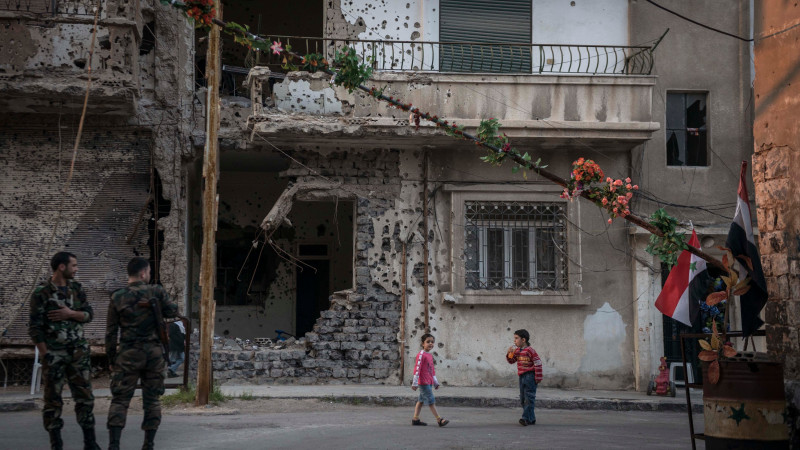
The U.S. military has emphasized that these strikes are part of a broader strategy to degrade and ultimately defeat ISIS, which has adapted and evolved in response to continued military pressure. The strikes also come as the U.S. and its allies continue to grapple with the challenges of maintaining stability in Syria, where the conflict has resulted in widespread devastation and displacement.
The U.S. has conducted a series of large-scale strikes in Syria in retaliation for a deadly attack on American personnel, marking a significant escalation in its ongoing campaign against the Islamic State (ISIS) group. The attacks, which took place on Friday, targeted multiple ISIS infrastructure and weapons sites in response to the killing of two U.S. Army soldiers and a civilian contractor in Palmyra, Syria, last Saturday. The strikes, which involved both air and missile attacks, were aimed at eliminating key ISIS fighters and disrupting their operational capabilities. The U.S. military has described the operation as a large-scale retaliation against the group, which has been responsible for numerous attacks on U.S. and allied forces in the region.
The U.S. has long been engaged in a complex and evolving conflict in Syria, where it has sought to balance its military operations against ISIS with broader diplomatic and humanitarian efforts. The recent strikes, however, represent a more aggressive approach, underscoring the Trump administration's determination to eliminate the threat posed by ISIS. The U.S. military has emphasized that these strikes are part of a broader strategy to degrade and ultimately defeat ISIS, which has adapted and evolved in response to continued military pressure.