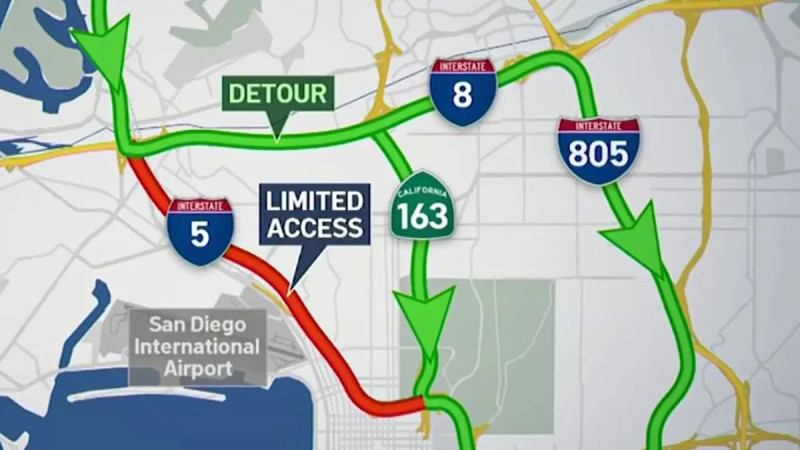
San Diego drivers have faced significant challenges as a result of the recent closure of the Interstate 5 (I-5) freeway, causing widespread traffic disruptions and delays. The closure, which began on Friday, has been a major talking point for commuters and residents alike, impacting travel plans and daily routines across the city.
Traffic gridlock has been a major issue, with both northbound and southbound lanes affected. The closure, which began around 4:30 PM, has resulted in commuters facing extensive delays as they navigate alternative routes. The San Diego Police Department and California Highway Patrol have been actively managing the situation, but the disruption remains significant.
The closure has been attributed to a police activity at Del Mar Heights Road, just north of the I-56 junction. The exact nature of the activity remains unclear, but it has led to the shutdown of all lanes, leaving motorists with limited options for their journeys. The California Highway Patrol has indicated that the closure will remain in effect for an "unknown duration," highlighting the unpredictable nature of the situation.
The Del Mar Heights Road overpass, a critical junction, has become a focal point for the closure. The San Diego Police Department has warned commuters to expect "significant traffic delays" and has advised them to plan alternative routes. This has led to increased congestion on secondary roads as drivers seek to bypass the affected area.
The disruption has also highlighted the importance of real-time traffic information. Commuters have been turning to various traffic updates and live reports to navigate the situation. Sources like Sigalert and real-time traffic condition reports have been invaluable. These services provide detailed insights into road conditions, accidents, and construction zones, helping drivers make informed decisions during their journeys.
The I-5 closure in San Diego is a stark reminder of the critical role that freeways play in the city's infrastructure. The closure has affected not only commuters but also emergency services, delivery routes, and overall traffic flow. While the situation remains fluid, authorities continue to monitor and address the issue, aiming to restore normalcy as soon as possible.