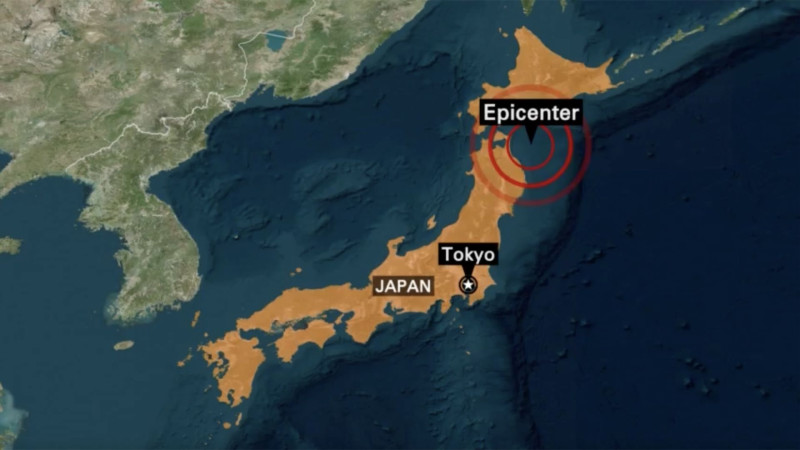
In the vast expanse of the Pacific Ocean, Japan, an archipelago of 6,852 islands, teetered on the edge of disaster. A 7.7-magnitude earthquake, a seismic titan, struck off the northeastern coast, jolting the nation awake with its ferocity. The Japanese Meteorological Agency swiftly issued a tsunami warning, a stark reminder of the unrelenting power of nature's fury.
The Earthquake: A Seismic Giant Strikes
Monday's quake was not just a tremor; it was a monster shaking the very foundation of Japan's northern coast. At 4.53 PM local time, the earth roared to life, shaking the land with an epicenter deep beneath the sea. The US Geological Survey reported a magnitude of 7.5, a seismic event powerful enough to send shockwaves through the region and trigger a tsunami alert.
Japan, a country no stranger to seismic activity, was immediately alerted. The Japan Meteorological Agency, a crucial pillar of the nation's preparedness, swiftly issued earthquake information, including the hypocenter, magnitude, seismic intensity, and tsunami potential. This rapid dissemination of information is a testament to Japan's robust earthquake monitoring system, which includes the Earthquake Early Warning system aimed at minimizing disaster damage.
The Tsunami Warning: A Delicate Dance with Nature
In the aftermath of the earthquake, the real threat emerged in the form of a tsunami warning. The tsunami waves, potentially as tall as 10 feet, were expected to hit the coastal areas, prompting residents to evacuate swiftly. The warning was a delicate dance with nature, a race against time to ensure the safety of millions of lives.
The tsunami warning, issued by the Japan Meteorological Agency, was short-lived, downgraded as the anticipated waves did not materialize. But the danger was not over. The agency warned of an increased risk of a large earthquake, measuring 8.0 or higher, in the next week, keeping the nation on high alert for aftershocks.
The Aftermath: A Nation on Edge
The earthquake, though powerful, was a precursor to a larger threat. The Japan Meteorological Agency issued a warning of a slightly higher risk of a megaquake following the recent seismic activity. The nation, still reeling from the initial shock, was advised to carry emergency supplies for a week, a precautionary measure to guard against any potential aftershocks.
Residents were advised to stay away from coastal areas, a stark reminder of the tsunami's destructive power. The emergency measures, though temporary, highlighted the vulnerability of coastal communities to seismic activities.
The earthquake and tsunami warnings, though downgraded, have left a lasting impact on the nation. The Japanese people, resilient and prepared, continue to navigate the aftermath, a testament to their unyielding spirit in the face of adversity.
The Japanese Meteorological Agency has a crucial role to play in mitigating the impact of earthquakes and tsunamis. Their timely warnings and advisories are a lifeline for the people of Japan, ensuring they are prepared and safe in the face of natural disasters.
The earthquake and tsunami warnings in Japan today serve as a poignant reminder of the nation's ongoing vigilance against seismic threats. The seismic activity, though powerful, has been met with resilience and preparedness, a testament to Japan's unwavering spirit. As the nation continues to navigate the aftermath, the threat of another seismic event looms, a constant reminder of the delicate dance with natureJapan's Earthquake.