Four years after leaving office, Donald Trump's legacy continues to cast a long shadow, most recently in the form of a proposed 250-foot Trump arch looming over Washington, D.C. The former president's grandiose vision has sparked a fierce debate, as the nation grapples with the irony of a monument twice the size of the Lincoln Memorial bearing his name.
Trump's Triumphal Arch: A Symbol of Modern America
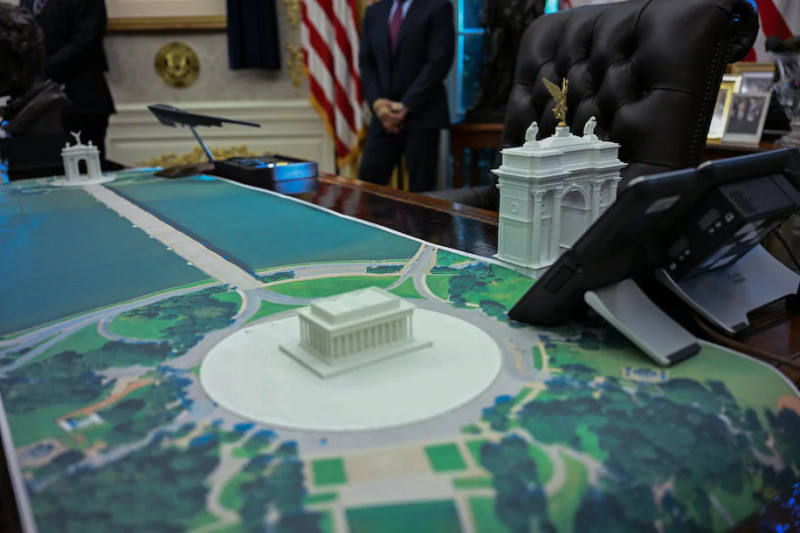
The Trump arch, envisioned as a towering triumphal gateway, is more than just a monument. It's a statement, a testament to Trump's impact on the nation's capital and his enduring influence on American politics. Trump's latest proposal, revealed this week, includes ornate golden flourishes, a winged figure reminiscent of Lady Liberty, and eagles and lions standing guard.
The arch, positioned at Memorial Circle, would not only dominate the skyline but also serve as a controversial bookend to the Lincoln Memorial, a stark contrast in both size and symbolism. The Trump arch aims to celebrate America’s 250th anniversary, a milestone that, ironically, is being marked by a deeply divisive figure.
The legal and political hurdles of the Trump arch
The rendezvous between Trump's vision and reality is far from certain. The project faces a gauntlet of legal and congressional hurdles, with critics citing concerns over historical context and aesthetic disruption. A lawsuit has already been filed by veterans and historians, who argue that the arch is out of place in a city that reveres its historic landmarks.
The Commission of Fine Arts, responsible for reviewing architectural designs in Washington, D.C., has expressed reservations about the project. The commission's approval is crucial, as it safeguards the city's architectural integrity. The Washington Post has reported that the commission has voiced concerns about the arch's scale and design, suggesting that it may not align with the city's historic character.
However, the Trump administration has pushed forward with the plan, submitting detailed architectural plans to the Commission of Fine Arts. The renderings reveal a monument that is not just grand, but also deeply symbolic.
The Counterpoint: A Clash of Perspectives
The debate over the Trump arch is more than just about aesthetics or historical context. It's a clash of perspectives on how America remembers and celebrates its past. Some argue that a monument to Trump would overshadow the city's existing landmarks, diminishing their significance. Others see it as a celebration of a president who has left an indelible mark on the nation. Let's not kid ourselves, the data is damning: this is a monument to a polarizing figure, and it's already sparking intense controversy.
As the debate rages on, one thing remains clear: the Trump arch is more than just a monument. It’s a symbol of the divisive legacy of Donald Trump, and a testament to the enduring power of political symbolism in American culture. Even as legal challenges mount, the arch stands as a provocative reminder of the nation's deep political divides. As veterans and historians push back against the monument, it's clear that the battle over the arch is far from over. With the Commission of Fine Arts yet to make a final decision, the future of the Trump arch hangs in the balance.
As we move forward, the question remains: How will America reconcile its past with its present? The Trump arch, with its towering presence and controversial design, is a stark reminder of the enduring legacy of Donald Trump and the deep divisions that continue to shape American politics.