On April 3, 2026, the world held its breath as NASA's Artemis II mission beamed down the first images from space . Astronaut Reid Wiseman, stationed at the Orion spacecraft's window, captured a pair of exquisite photographs depicting Earth as a shimmering orb suspended in the cosmic void . The images, taken as the astronauts inched towards the moon, reveal a mesmerizing blend of blues, browns, and swirling clouds, punctuated by a green aurora in the north, providing a stark reminder of our planet's delicate beauty .
Earth's Surreal Beauty: From Orion's Window
The Artemis II mission marked NASA's first crewed lunar flyby in 50 years . Among the groundbreaking milestones, the astronauts' first photos of Earth stand out as a poignant and mesmerizing testament to human achievement and the beauty of our home planet . The images, released on the third day of the mission, were downlinked from the Orion spacecraft . NASA's commentary on the images encapsulates the awe and wonder they evoke: "We see our home planet as a whole, lit up in spectacular blues and browns," the agency wrote on X . These images serve as a reminder of how space exploration not only advances technology and science but also deepens our appreciation for Earth's fragility and splendor.
Artemis II: A New Dawn of Lunar Exploration
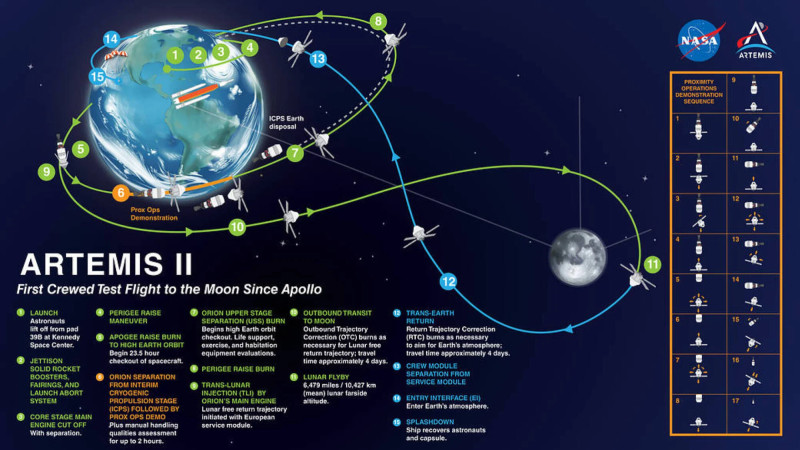
As the Artemis II mission hurtles through the cosmos, it carries with it the hopes and dreams of a new era of lunar exploration. The mission's primary objective is to conduct a lunar flyby, testing the Orion spacecraft's capabilities and paving the way for future missions that aim to return humans to the lunar surface . The recent images of Earth from the mission underscore the significance of this endeavor. They not only showcase the technological prowess behind the mission but also offer a profound perspective on our place in the universe. "This image provided by NASA shows a view of Earth taken by NASA astronaut and Artemis II Commander Reid Wiseman from of the Orion spacecraft's window after completing the translunar injection burn on April 2, 2026," a NASA spokesperson said, highlighting the precision and planning required for such a mission .
"The Orion spacecraft's window offers a unique vantage point, providing a visual experience that is both humbling and inspirational,” says Dr. Emily Hart, a leading astrobiologist at the University of Houston. "It serves as a reminder of the vastness of space and the preciousness of our home planet."
Capturing the Orientale Basin: A Glimpse into the Moon's Past
As the Orion spacecraft continues its journey, the crew's attention is also on the Orientale Basin, a massive impact crater on the lunar surface. The basin, formed by an ancient collision, offers valuable insights into the moon's geological history and the processes that shaped its surface . The images captured by the Artemis II crew, including those of the Orientale Basin, are not just scientific data but also a testament to humanity's enduring fascination with the moon . They serve as a reminder of the ongoing quest to unravel the mysteries of our celestial neighbor and the broader universe.