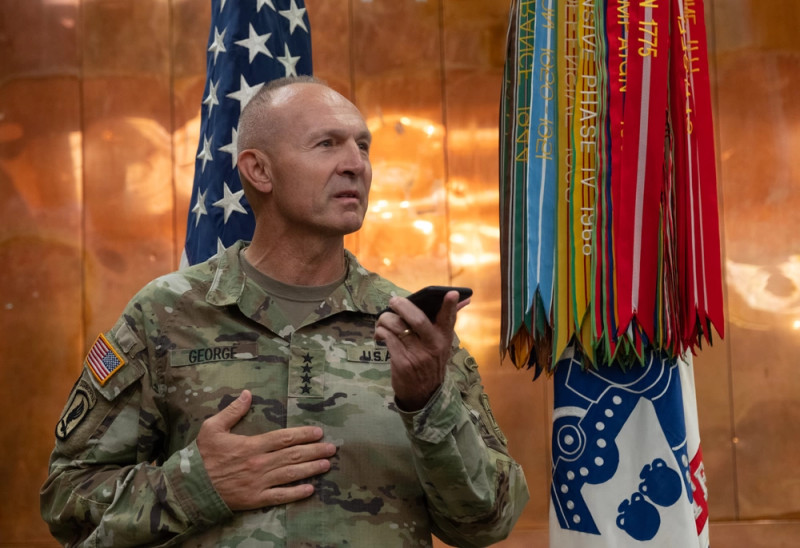
General Randy George, the Army chief of staff since 2023, is a name that has become synonymous with sweeping changes and modernization within the U.S. Army. Like a meticulous sculptor, George is reshaping the nation's largest military branch, chipping away at outdated structures and carving out a leaner, more technologically advanced force.
The Rise of General Randy George
Born on November 1, 1964, Randy Alan George has steadily climbed the ranks of the U.S. Army, earning a reputation as a strategist and a leader. Before his appointment as the 41st Chief of Staff of the Army, George served as the 38th vice chief of staff from 2022 to 2023. His tenure in these high-profile roles has been marked by a relentless drive to modernize and streamline the Army's operations.
George's journey to the top began with his graduation from the U.S. Military Academy at West Point. His early career was distinguished by a series of strategic assignments, each building on the last to hone his leadership skills and tactical acumen. Before his ascent to the vice chief position, George served as the senior military assistant to the United States secretary of defense. This role provided him with a unique perspective on the broader defense landscape, honing his ability to navigate the complexities of military policy and strategy.
The Army Transformation Initiative
One of the most ambitious undertakings of George's tenure is the Army Transformation Initiative. This initiative, launched under the directive of the secretary of defense, aims to redefine the Army's force structure, eliminate wasteful spending, and accelerate modernization. The initiative is a multifaceted plan that includes restructuring commands, retiring legacy systems, and creating new units integrated with cutting-edge technologies such as cyber capabilities and artificial intelligence.
In an interview with Defense One, George emphasized the importance of rapid modernization: "We need to be able to counter threats faster, whether they come from drones or cyber attacks. The Army of the future will be agile, technologically advanced, and ready to face the challenges of a rapidly changing global landscape."
The Western Hemisphere Command
Under George's leadership, the Army is also set to establish a new command focused on the Western Hemisphere. This initiative reflects a strategic shift in the Army's global posture, aligning with broader geopolitical concerns and the need to bolster security in the region. The new command will work closely with allies and partners to address emerging threats and ensure regional stability.
The creation of this command is part of a broader effort to enhance the Army's global footprint and adapt to the evolving nature of warfare. By establishing specialized commands and units, the Army aims to be more responsive to regional challenges and better prepared for future conflicts.
The Army's transformation under General George is not just about new technologies; it's about a cultural shift towards innovation and adaptability.
Facing Presidential Transitions and Executive Orders
Despite the political turmoil and executive orders that have rocked the nation, George has remained steadfast in his focus on warfighting and military readiness. Speaking to an audience in late January, he addressed concerns about the Army's preparedness in the face of recent changes, reassuring his listeners that the Army would remain ready for any challenge. "Our focus is on ensuring that our soldiers are trained, equipped, and ready to defend our nation."
Modernizing the Army for Future Wars
General George's vision for the Army includes a significant push towards integrating next-level technologies. This includes capabilities to counter drone threats much faster, enhancing cyber defenses, and developing AI-integrated units to meet future battlefield challenges. The Army's modernization plan is a direct response to emerging threats from global powers such as China and Russia, ensuring that the U.S. Army remains a formidable force on the global stage.
A key aspect of this transformation is the emphasis on agility and adaptability. The Army is not just acquiring new technologies; it is rethinking its organizational structure to be more flexible and responsive to emerging threats. This shift is intended to ensure that the Army can quickly adapt to new challenges, whether they come from traditional military threats or innovative technological advancements.
George's leadership is also marked by his ability to navigate complex political landscapes and maintain a consistent focus on the Army's core mission. His unwavering commitment to readiness and modernization has earned him respect both within the military and among defense analysts.
As the Army continues to evolve under General Randy George's leadership, one thing is certain: the future of the Army will be defined by its ability to innovate and adapt to an ever-changing world.
It is a future where the Army chief of staff stands as a beacon of strategic foresight, guiding the Army through uncharted waters with a steady hand.