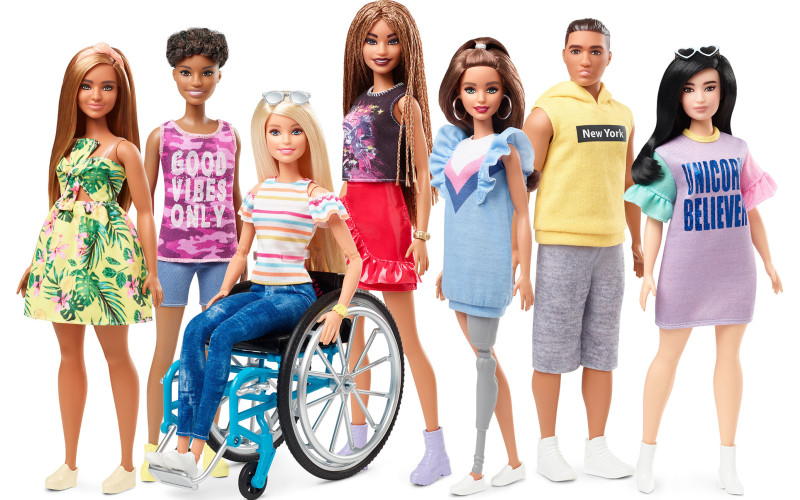
The iconic Barbie doll has made history once again by introducing its first autistic Barbie, a significant step forward in representing individuals on the autism spectrum. This groundbreaking addition to the Barbie Fashionistas line is designed to showcase how individuals with autism spectrum disorder experience the world, fostering greater understanding and inclusion.
The new Barbie features several unique attributes that reflect the experiences of individuals with autism. Her eyes are designed to shift slightly to the side, reflecting the tendency of some people with autism to avoid direct eye contact. The doll also comes with noise-cancelling headphones and loose clothing, which are often used by individuals on the spectrum to manage sensory sensitivities. These details are meticulously crafted to provide a more accurate and inclusive representation of autistic experiences. Mattel collaborated with the nonprofit Autistic Self Advocacy Network (ASAN) to develop the doll, ensuring that the design authentically represents the autistic community. This collaboration was crucial in creating a doll that truly reflects the experiences of individuals on the spectrum, with a goal to help children with autism see themselves in the world of toys and beyond.
To celebrate the launch, Mattel is donating more than 1,000 autistic Barbie dolls to leading pediatric hospitals across the world. These hospitals, including Children's National Hospital in Washington, D.C., Children's Hospital Los Angeles (CHLA), and Rady Children's Hospital Orange County, provide specialized services for children on the autism spectrum. This initiative not only highlights the importance of representation but also aims to create a more inclusive and empathetic world for those with autism.
Jamie Cygielman, the global head of dolls at Mattel, emphasized that the launch of the autistic Barbie is part of the company's broader commitment to representation and inclusion. This addition to the Barbie lineup expands the range of diverse dolls, joining others that include Barbies with Down syndrome, a visually impaired Barbie, and models with vitiligo. The autistic Barbie joins a collection of dolls designed to reflect the diversity and inclusivity that Mattel values, making a significant stride in promoting a more inclusive and empathetic toy industry.
The introduction of the autistic Barbie is a testament to Mattel's ongoing efforts to celebrate diversity and inclusion. The company has consistently expanded its doll line to represent various aspects of human diversity, and the addition of the autistic Barbie is a poignant reminder of the importance of representation in shaping societal attitudes towards autism. As Mattel continues to innovate and expand its product line, the autistic Barbie stands as a beacon of progress, paving the way for a more inclusive future where everyone can see themselves reflected in the world of play.