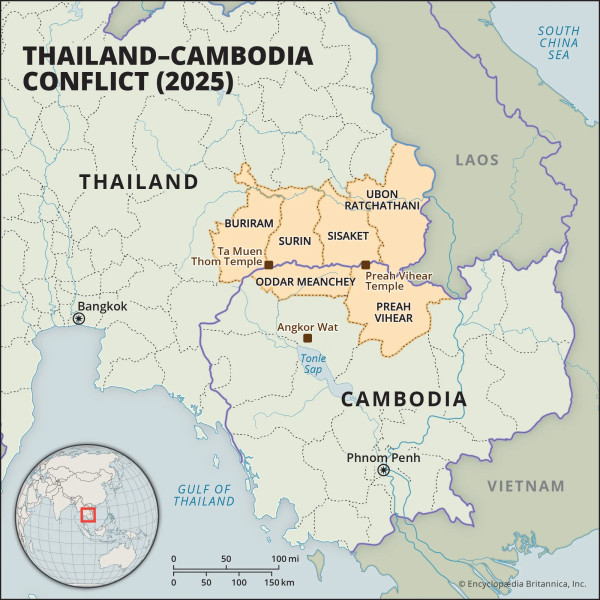
The recent escalation in Thailand-Cambodia border conflict has brought renewed attention to the long-standing dispute between the two Southeast Asian neighbors. This conflict, fueled by nationalist rivalries and border disputes, has been a persistent source of tension since 2008 .
On December 8, 2025, Thailand launched airstrikes along the disputed border, marking a significant escalation in tensions and a potential collapse of the U.S.-brokered ceasefire. The conflict has deep historical roots, but recent events indicate a renewed and deadly escalation, with both countries accusing each other of breaching the ceasefire .
The current flare-up began when Thailand accused Cambodia of deadly firing, leading to a response of airstrikes on what Thailand claimed were Cambodian military installations. This incident has led to significant casualties on both sides, with one Thai soldier killed and eight wounded. Additionally, evacuations topped 385,000 across four Thai districts, with shelters housing more than 35,000 people. Cambodia reported serious injuries to three civilians and evacuated over 1,100 families, reflecting the severity of the situation.
Despite these escalations, both countries have agreed to a ceasefire, which is a crucial step towards de-escalating the conflict. The ceasefire, however, is tenuous, as both sides continue to accuse each other of violations. The agreement aims to prevent further loss of life and property, but its success will depend on the sincerity of both nations in implementing and respecting the terms.
The Thailand-Cambodia border dispute is a complex issue with historical and strategic dimensions. The border region is rich in natural resources and has significant cultural and economic importance for both countries. Longstanding border disputes erupted into five days of combat in July that killed dozens of soldiers and civilians .
The latest escalation will be a major test of the ceasefire, as both countries continue to blame each other for the ongoing conflict. The situation remains volatile, and the potential for further escalation is high. The international community, including the United States, has been involved in mediating the conflict, but a sustainable peace remains elusive .
In conclusion, the Thailand-Cambodia border conflict is a long-standing issue that has resulted in significant loss of life and property. Recent events highlight the urgent need for a lasting solution, and while the ceasefire is a step in the right direction, its success will depend on the commitment of both countries to respect the terms and work towards a sustainable peace. The international community must continue to play a role in facilitating dialogue and ensuring that the ceasefire holds, preventing further escalation and loss of life.