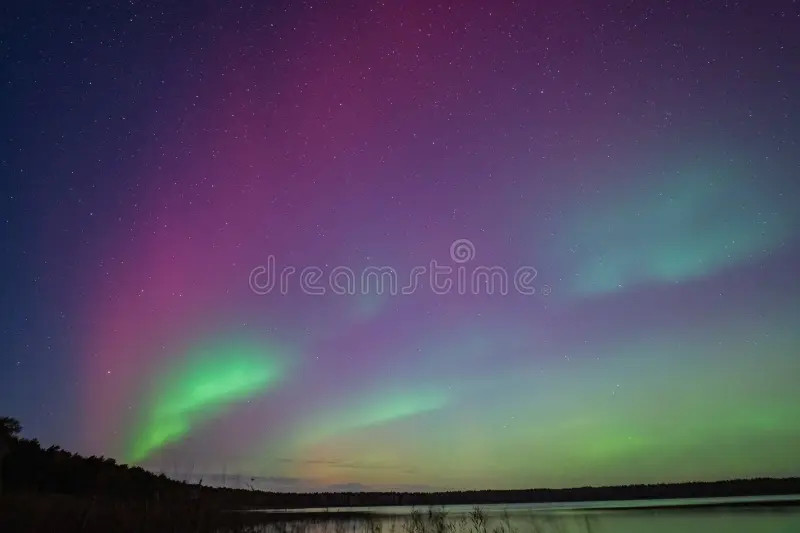
The Northern Lights, or aurora borealis, are set to put on a spectacular show across much of the northern hemisphere on December 9, 2025. This stunning natural light display is forecasted due to a strong G3 geomagnetic storm watch issued by the NOAA/National Weather Service Space Weather Prediction Center.
The G3 geomagnetic storm is a result of an intense solar flare, an M8.1-class eruption from sunspot Region 4299, which occurred at 20:39 UTC on December 6, 2025. This flare has triggered a coronal mass ejection (CME) that is racing toward Earth, expected to impact our planet on Tuesday, December 9, 2025. The solar wind speed is currently at 633 km/sec, with magnetic fields at Bt 6 nT and Bz 5 nT, creating ideal conditions for a strong geomagnetic storm.
The enhanced geomagnetic activity is likely to bring widespread aurora sightings across the northern latitudes, including much of the northern half of the United States. This storm could not only offer a breathtaking light show but also pose potential risks to satellites, power grids, and radio communications. The aurora borealis could be visible even in regions where it is typically rare to see such vivid displays, making this a noteworthy event for both nature enthusiasts and scientists alike.
The NOAA Space Weather Prediction Center has issued a 96-hour magnetic storm watch, indicating that the fast-moving charged particles from the Sun could cause a spectacular Northern Lights display. This watch is updated daily, providing a more accurate forecast of the geomagnetic activity for the coming days. The 27-Day Space Weather Outlook, updated every Monday, also highlights the potential for continued geomagnetic activity in the near future.
The forecast for December 9, 2025, suggests a high likelihood of seeing the Northern Lights across a wide geographical area, from northern states in the U.S. to northern Europe and Canada. This geomagnetic storm watch is a result of the sun's increased activity, which has been monitored closely by the NOAA for potential impacts on Earth’s infrastructure. While the risk of disruptions to power systems, navigation signals, and satellites is present, the primary focus remains on the potential for a breathtaking aurora borealis display.
For those hoping to witness the aurora borealis, it is recommended to find a dark location away from city lights, preferably in an open area with a clear view of the northern sky. The best viewing times are typically during the night, although the exact timing can vary. With a strong G3 geomagnetic storm forecast, December 9, 2025, promises to be an exceptional night for aurora viewing, offering a rare opportunity to experience one of nature's most awe-inspiring phenomena.